

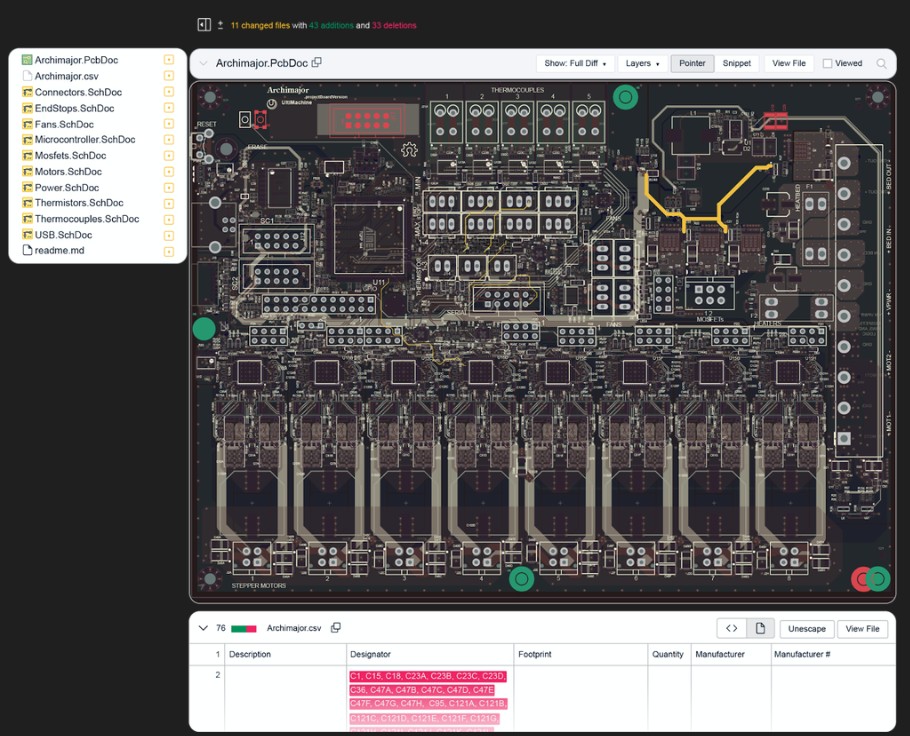
Hardware engineering teams rely heavily on design reviews to validate whether a product meets specifications before it moves toward manufacturing. Yet despite decades of advances in design tools, the process surrounding these reviews remains largely unchanged. According to an analysis of the AllSpice platform on Hardware FYI, many teams still rely on periodic meetings, exported PDFs, and scattered comments across email, chat platforms, and shared folders to evaluate complex designs.
These traditional workflows originated when hardware projects moved more slowly and collaboration mainly depended on gathering engineers in a room. In modern development environments, however, product complexity has increased while schedules have tightened. The result is a gap between the design’s intent, the supporting documentation, and the actual implementation. Critical issues often emerge from this disconnect, particularly when specifications, datasheets, and design files live in separate systems.
AllSpice, a startup focused on improving collaboration in electronics engineering, is attempting to modernize this process. Its early work centered on creating a diff engine for electronic design automation files such as schematics and printed circuit board layouts. Rather than simply comparing exported files, the system analyzes the underlying design database to highlight changes in components, nets, parameters, and layout details between revisions. This approach helps engineers quickly identify meaningful differences and understand the implications of design modifications.
The broader goal is to transform design reviews from isolated checkpoints into an ongoing, iterative workflow. Instead of waiting for scheduled meetings, engineers can continuously review design changes as they occur, similar to code reviews in software development. Automated analysis tools and AI agents can perform first-pass checks, flag inconsistencies, and surface potential risks early in the process.
Importantly, AllSpice’s approach does not attempt to replace engineers’ judgment. Architectural decisions and trade-offs remain fundamentally human tasks. Instead, the platform focuses on eliminating repetitive verification work, such as tracing signals across schematics or checking datasheet constraints. By reducing friction in collaboration and validation, continuous design reviews could shorten development cycles and prevent costly errors that might otherwise appear only after a design reaches production.
