

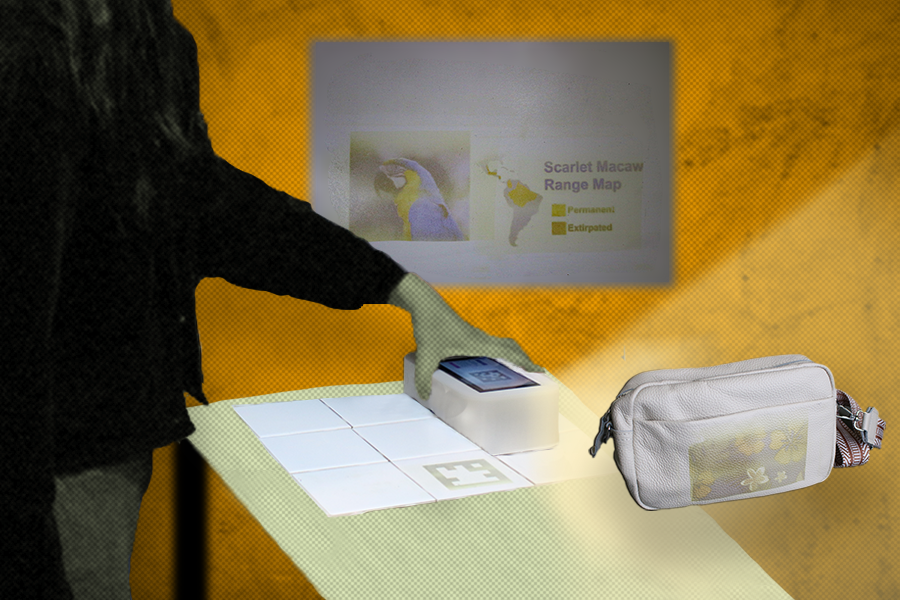
A new system developed by researchers at MIT CSAIL introduces a way to dynamically alter the appearance of everyday objects using high-resolution imagery. The device, called ChromoLCD, combines a liquid crystal display with ultraviolet and RGB light sources to “stamp” programmable images onto surfaces coated with photochromic materials. This approach allows physical objects to function like reprogrammable displays without embedding traditional electronics.
Unlike earlier projector-based or LED-only systems, ChromoLCD achieves both portability and improved image quality. The LCD panel precisely controls light at the pixel level, ensuring accurate alignment across multiple wavelengths while producing sharper, multicolor images. The result is a compact, handheld device capable of generating detailed visuals directly onto flat surfaces such as fabrics, whiteboards, or walls.
The system works by activating and deactivating color channels in photochromic dyes through controlled light exposure. Ultraviolet light first saturates the material, while visible wavelengths selectively adjust individual colors to form a final image. This process can create high-resolution patterns in minutes, enabling on-demand customization of physical objects.
Researchers demonstrated several applications that highlight the technology’s versatility. Personal accessories can be updated with new designs throughout the day, eliminating the need for multiple versions of the same product. In another use case, ChromoLCD generates reprogrammable augmented reality markers on surfaces such as kitchen counters, linking physical spaces to digital content. It can also support interactive teaching by projecting reference images onto whiteboards that users can annotate in real time.
Despite its promise, the system currently works best on flat, photochromic-coated surfaces and relies on a stamping interaction, limiting scalability for larger or curved objects. Still, the concept signals a shift toward programmable materials that merge digital flexibility with physical form. By enabling objects to change appearance without screens or permanent modifications, ChromoLCD opens new possibilities for design, manufacturing, and human–computer interaction.
