

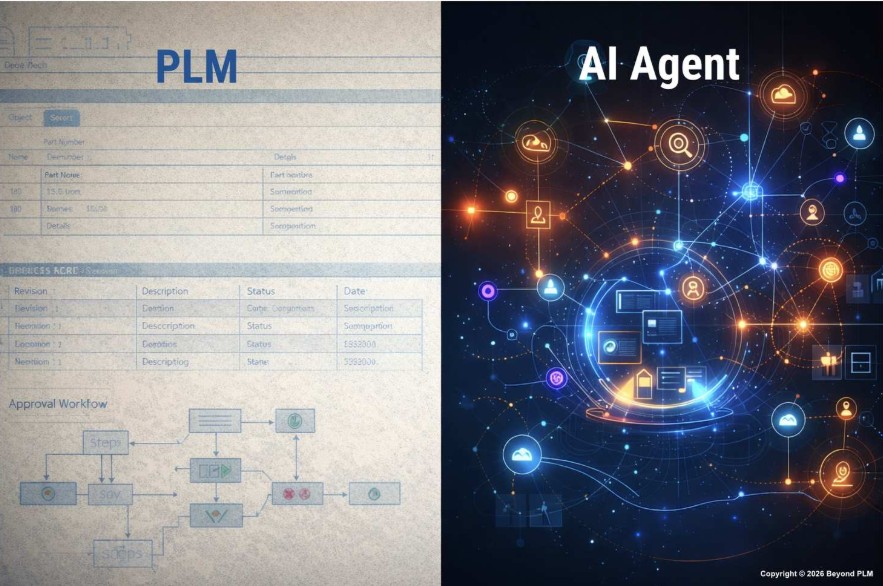
A recent analysis of leaked internal architecture from Anthropic’s Claude Code offers a revealing lesson: production-grade AI systems are not defined by powerful models alone, but by the surrounding infrastructure that enables them to operate reliably. This insight challenges a dominant assumption in product lifecycle management (PLM): that simply adding AI features to existing platforms will make them intelligent.
The Beyond PLM article argues that this approach is fundamentally flawed. In real-world AI systems, the model is only a small component. The bulk of functionality lies in orchestration layers such as memory systems, permission controls, tool integration, and context management. These elements ensure that AI agents can act consistently, verify information, and interact with complex environments.
Traditional PLM systems, however, were not designed with these needs in mind. Built as systems of record, they prioritize structured data, file storage, and human-driven workflows. While effective for tracking parts, revisions, and approvals, this architecture lacks the persistent context and operational flexibility that AI agents require.
The mismatch becomes clear when AI is layered onto legacy systems. Instead of true intelligence, organizations get surface-level capabilities such as summarization or conversational interfaces. These tools may appear useful but often rely on incomplete or outdated data, leading to confident yet unreliable outputs.
To support AI agents, PLM must evolve beyond static records toward dynamic work environments. Agents need continuous context, shared workspaces, policy-driven actions, and verifiable product memory. They must be able to interact with both data and workflows in a way that reflects real engineering processes rather than isolated database transactions.
The conclusion is clear: meaningful AI integration requires re-architecting PLM systems from the ground up. The future lies in transforming PLM from a passive system of record into an active, AI-native workspace where humans and agents collaborate around shared product knowledge.
