

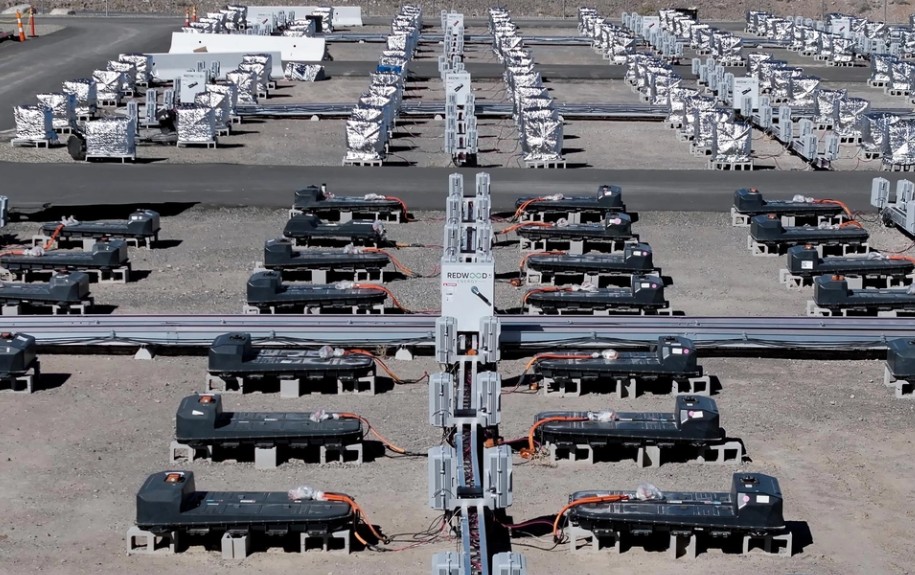
As electric vehicles reach the end of their automotive lives, their batteries are emerging as valuable assets rather than waste. An IEEE Spectrum article examines the growing market for second-life EV batteries, highlighting how battery packs that no longer meet the performance demands of transportation can continue serving in stationary energy storage applications for many years.
Electric vehicle batteries are typically retired when their capacity falls to around 70–80% of the original level. Although this reduced capacity limits driving range, the batteries remain well suited for less demanding applications such as storing electricity from solar panels, providing backup power for buildings, and helping stabilize electrical grids. Reusing these batteries delays recycling, extracts more value from the materials used to manufacture them, and reduces the environmental impact associated with producing new storage systems.
The article notes that several automakers, utilities, and technology companies are developing systems that repurpose used EV battery packs. Before entering a second-life application, each battery undergoes detailed testing to evaluate its remaining capacity, internal resistance, and overall health. Engineers also replace or redesign battery management systems to ensure safe and reliable operation in stationary environments, where charging and discharging patterns differ significantly from those in vehicles.
Despite the promise, second-life batteries present technical and economic challenges. Battery packs vary in chemistry, design, and degradation history, making standardization difficult. Reliable diagnostic tools are essential to determine whether a battery is suitable for reuse and to predict its remaining lifespan. In some cases, the falling cost of new batteries also reduces the financial advantage of repurposed systems.
Even so, the industry sees considerable potential. As millions of electric vehicles enter service worldwide, the supply of retired batteries will increase substantially over the next decade. Second-life applications could provide affordable energy storage for renewable power systems, commercial facilities, and community microgrids while easing pressure on critical mineral supplies.
The article concludes that extending battery life through reuse represents an important step toward a more circular battery economy. By maximizing the usefulness of existing materials before recycling, second-life battery systems can improve sustainability, lower costs, and strengthen the resilience of future energy infrastructure.
