


Demand for sustainable buildings is weakening across many global markets, according to the Royal Institution of Chartered Surveyors’ 2025 Sustainability Report. The report points to slowing demand, upfront costs, uncertain financial returns, and limited carbon measurement as barriers to progress in green real estate.
Global demand for sustainable buildings continues to decline, with RICS reporting a drop from 41% to 30%. Projects are stalling as developers and investors cite uncertain long-term savings. Nearly half of construction professionals report not measuring carbon on their projects.
Specialists at Exergio identified three unresolved problems: stalled demand, unclear financial value, and weak follow-through once buildings are operational.
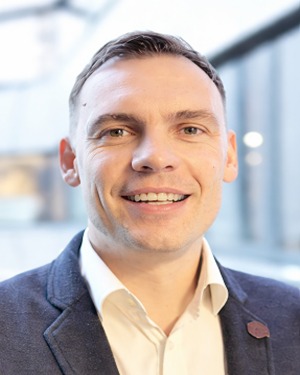
Donatas Karčiauskas, CEO of Exergio, said: “Investors aren’t against building sustainably – they just need proof it pays back. If a project requires expensive materials, equipment and certifications but the real-world performance doesn’t translate into measurable savings, why would anyone scale it? Until buildings can demonstrate clear, verifiable returns, demand will keep sliding,” Karčiauskas said.
Exergio focuses on using AI to optimize existing building systems rather than installing new hardware. Exergio said this method can reduce energy use in large commercial buildings by up to 30%. Based on current energy costs, the company said the reduction can exceed $1 million (about €1 million) in annual savings, offering measurable performance data for investors.
The RICS data also highlighted a gap between what building occupiers value and what investors prioritize. Occupiers emphasized performance factors, with 94% citing indoor environmental quality and 88% naming energy efficiency as top concerns. Investors, by contrast, focused more on certification labels, cited by 86%, and resilience features, cited by 78%.
Karčiauskas said: “Occupiers care about how a building works; investors care about how it’s labelled. Until performance and certification point in the same direction, we’ll keep building assets that look sustainable on paper but don’t deliver it in practice. The real solution is to measure what happens inside the building, every day – that’s when both groups finally get what they’re paying for,” he said.
RICS data showed limited use of carbon measurement in practice. About 50% of respondents do not measure embodied carbon, and only 16% use assessments to inform design decisions. 17% believe the industry has sustainability knowledge, while 10% report familiarity with whole-life carbon methods.
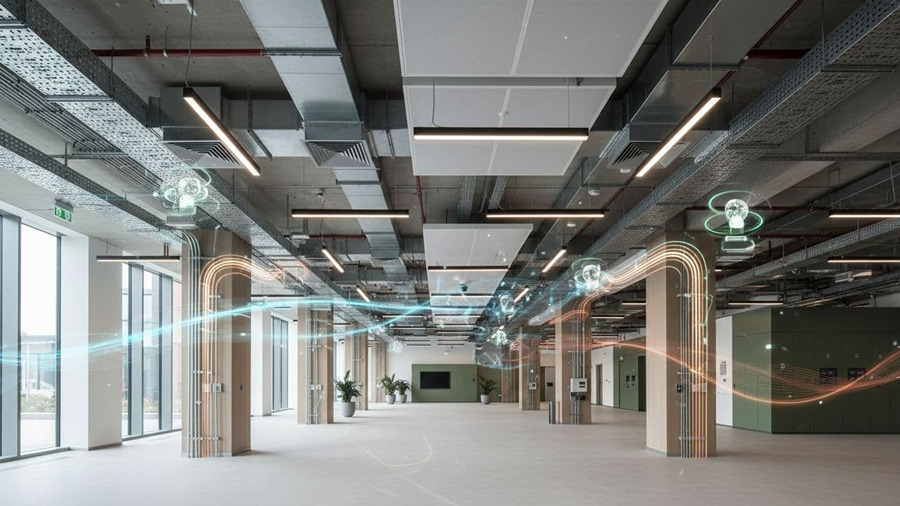
Karčiauskas said the lack of data and expertise explains why many sustainability decisions rely on assumptions.
“You can’t improve what you don’t measure, and you can’t measure what you don’t have the skills to assess. Right now, most carbon decisions are built on assumptions instead of real evidence,” he said.
He added that AI could address these gaps by automating data collection and analysis. AI systems can monitor building performance, interpret results and adjust systems at scale.

“AI closes the gap the industry can’t close on its own. It proves ROI with real performance data, aligns what occupiers want with what investors pay for, and automates optimization that today requires scarce expertise. If we want sustainability targets to become real outcomes, this is the only lever big enough to work at scale,” Karčiauskas said.
Source: Exergio
About Exergio

Exergio is a technology company that develops AI software to monitor and optimize energy use in commercial buildings. The company applies experience from building maintenance to design systems that analyze live building data and adjust operations automatically. Its platform monitors heating, ventilation, air conditioning, lighting, and related systems to identify inefficiencies and reduce energy waste while maintaining occupant comfort. Exergio’s software supports both static and adaptive building systems, allowing responses to changing environmental conditions. The company serves customers in real estate, property management, and facilities operations, including owners and operators of commercial and institutional buildings. Exergio has active projects in Poland, the UK, Ireland, the Czech Republic, Hungary, Oman, Sweden, and Lithuania. It is planning expansion into Germany and France.
About RICS

The Royal Institution of Chartered Surveyors (RICS) is a professional body for land, property, construction, and infrastructure professionals. It was founded in 1868 and is headquartered in London, the UK. RICS sets professional standards, qualifications, and ethical requirements for surveyors and built environment practitioners. Its work covers property valuation, construction management, land development, infrastructure planning, and real estate advisory services. RICS serves professionals working across public and private sector real estate and infrastructure markets. The organization develops technical guidance, issues professional credentials, and supports regulatory compliance across the built environment. RICS also provides training, continuing professional development programs, and industry research for its members. Its reports and standards are used by governments, financial institutions, developers, and construction firms worldwide. RICS operates through regional offices and professional networks in more than 140 countries. RICS has about 113,000 professional members and employs about 900 staff globally.
