

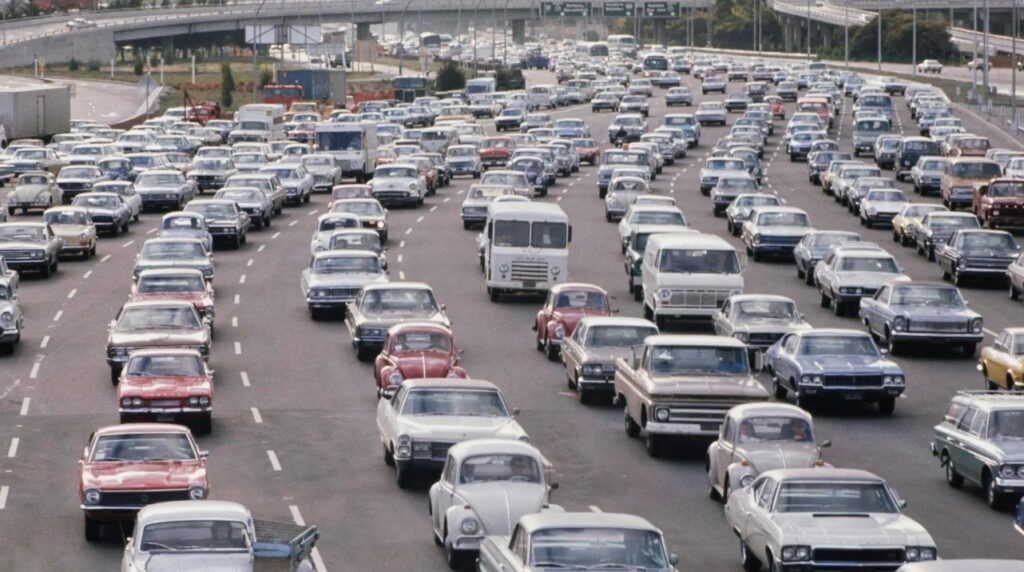
For decades, many urban planners and transportation advocates have viewed private automobiles as one of the greatest obstacles to healthy cities. Cars consume enormous amounts of urban space, generate pollution, encourage sprawl, and weaken walkable communities. But a new article in Forbes.com asks whether electric robotaxis may fundamentally alter that equation.
The article argues that autonomous electric taxis could eliminate many of the problems traditionally associated with human-driven gasoline vehicles. Because robotaxis would operate as shared transportation services rather than privately owned cars, they may dramatically reduce the need for parking infrastructure. Vehicles could remain in near-constant operation instead of sitting idle for most of the day, potentially freeing large amounts of urban land currently devoted to parking lots and garages.
Electric robotaxis could also reduce emissions, lower transportation costs, and improve road safety by removing human driving errors. The article suggests that autonomous fleets may work alongside walking, cycling, and public transportation rather than replacing them entirely. In some scenarios, robotaxis could even complement bike commuting by transporting riders and bicycles over longer distances before cyclists continue their journeys independently.
Still, skepticism remains strong among urbanists who worry that autonomous vehicles could intensify car dependency instead of reducing it. Critics argue that easier and cheaper automated travel might encourage more road usage, longer commutes, and additional urban sprawl. Public transit systems could also suffer if passengers shift toward inexpensive door-to-door autonomous rides. Similar concerns appear in broader discussions about the future of autonomous mobility and city design.
The debate ultimately reflects competing visions of urban life. One future imagines robotaxis as tools that reclaim city space from parking infrastructure while making transportation cleaner and more efficient. Another sees them as technologically advanced versions of the same automobile-centered systems that reshaped cities throughout the 20th century.
The article suggests that the outcome will depend less on the technology itself and more on policy decisions surrounding ownership models, transit integration, zoning, and urban planning. Electric robotaxis may either support more human-centered cities or deepen existing transportation problems, depending on how societies choose to deploy them.
