

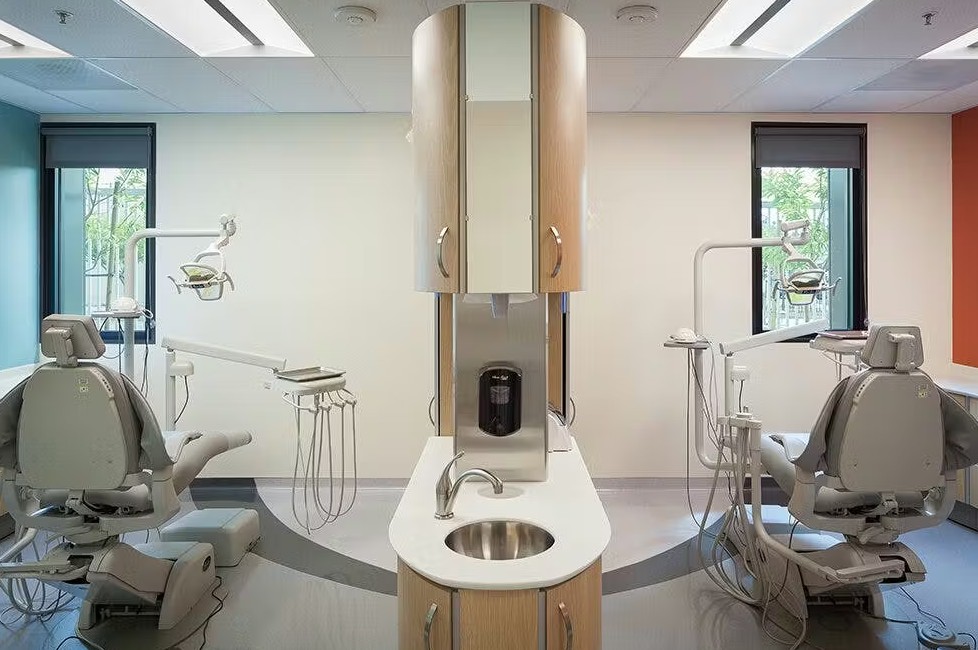
Several California school districts are confronting persistent declines in student enrollment by transforming underused buildings and rethinking traditional district operations. Rather than simply shuttering schools, administrators are choosing to repurpose facilities to address community needs and strengthen educational offerings, tells this article from Building Design & Construction. For example, Clovis Unified transformed a closed elementary school into a career and college education center that centralizes vocational programs such as welding, cosmetology, and health sciences. The district saw this as a way to better align educational programs with regional workforce demands and to attract and retain students whose families might otherwise pursue alternatives.
In the Central Union Elementary District, administrators converted vacant classrooms into early childhood education and family resource hubs. These new uses serve populations that previously lacked services, helping to build community support and downstream enrollment by focusing on families with young children. The district also invested in outdoor learning spaces to support student engagement and wellness, creating areas for gardening, play, and hands-on activities. School leaders emphasize that retreating from facilities altogether cedes valuable community assets and can weaken public confidence in the district’s long-term vision.
Funding from state programs, local bonds, and careful planning enables districts to renovate aging buildings to suit new purposes. Administrators stress the importance of community input, noting that involving parents, educators, and local partners in planning builds investment in the outcomes. Rather than viewing declining enrollment as purely a financial problem, these districts frame it as an impetus for innovation—an opportunity to diversify services, strengthen ties with local employers, and create learning environments attuned to the realities of modern education and community life.
