

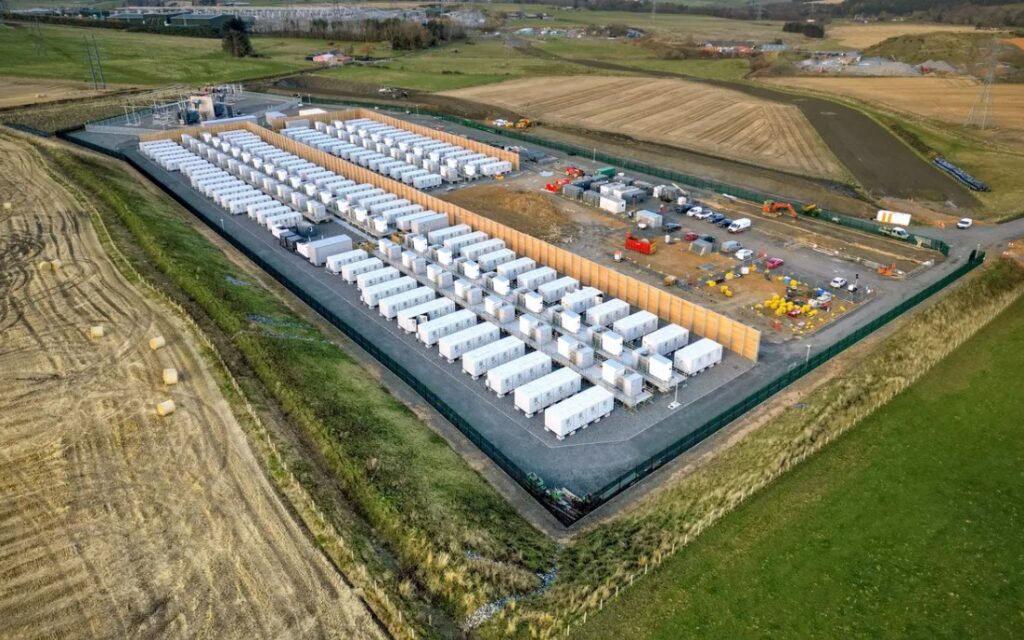
The new Blackhillock grid-scale battery, situated between Inverness and Aberdeen in Scotland, began operations just days before a major grid disturbance in March. When a wood-burning generator in Northern England unexpectedly shut down—causing a sudden 1,877 MW drop in power and a dangerous dip in grid frequency—the 200 MW lithium-ion battery sprang into action within milliseconds, stabilizing the grid, says IEEE Spectrum.
This installation, the largest of its kind in Europe, replaces the inertia traditionally provided by spinning rotor generators with advanced grid-forming inverters. These inverters simulate inertia and can also deliver short-circuit current, mimicking the behavior of conventional synchronous generators in fault conditions.
The project is part of a broader U.K. initiative aimed at achieving a fossil fuel-free grid operation by 2025. The National Energy System Operator (NESO) envisions a few hours of zero-carbon operation by year-end, demonstrating the viability of grids without gas-fired plants.
Operating without moving parts, Blackhillock enhances grid stability and enables higher integration of renewable energy sources—such as wind and solar—that lack inherent inertia. This stability also reduces the curtailment of renewable generation, boosting the use of clean energy and potentially saving consumers hundreds of millions of pounds over time.
