

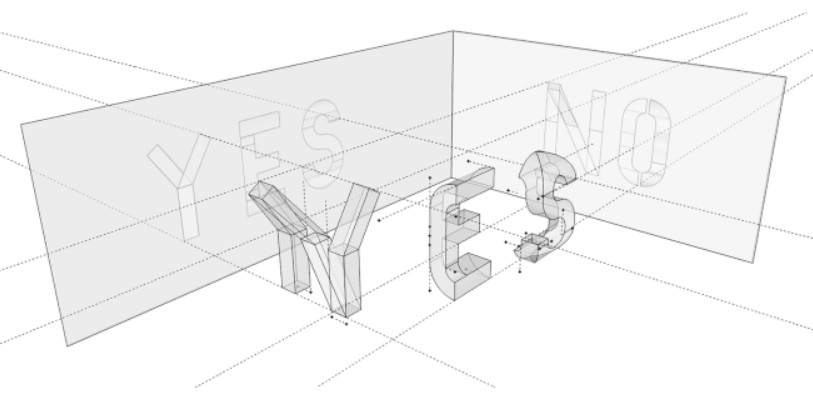
A new paper in the journal Nature Communications outlines how modern three-dimensional and multidimensional X-ray imaging goes far beyond traditional two-dimensional projections to reveal internal structure, density variations, and dynamic processes inside complex materials. Because 2D X-ray images flatten depth into a single plane, they can conceal crucial features—overlapping elements may appear connected, and hidden defects can go undetected. Volumetric reconstruction addresses those limitations by capturing the full spatial context of a specimen, allowing researchers to “slice” virtually through the interior at any depth. This capability is essential in fields where internal architecture governs function or failure, such as electronics quality control, battery degradation analysis, and materials science.
The authors describe the evolution of X-ray imaging from early computed tomography, which already transformed medical diagnostics, to current techniques that achieve nanometer-scale resolution and can track changes over time and across chemical states. State-of-the-art sources such as synchrotrons and X-ray free electron lasers deliver high brightness and tunable energy that make these enhanced modalities possible. Multidimensional imaging combines spatial, temporal, and spectroscopic information, enabling scientists to observe not just static structure but processes as they unfold under real conditions, such as in operando battery studies.
Examples discussed include analyses of printed circuit boards, where 3D reconstructions identify voids and delamination that 2D views miss, and commercial lithium-ion cells, where internal microcracks and deformation during charge cycles are visible only with full volume imaging. Applications also extend to Earth and planetary materials: 3D imaging enhances the study of minerals formed under extreme pressures and temperatures, revealing textures and connections critical to interpreting geological history.
Looking ahead, artificial intelligence is speeding up noise reduction, feature segmentation, and automated defect detection in large datasets. Operando experiments and imaging under extreme environments are expanding the reach of X-ray techniques. Together, these advances promise to transform materials characterization across disciplines, giving scientists and engineers unprecedented insight into the hidden inner workings of complex matter.
