

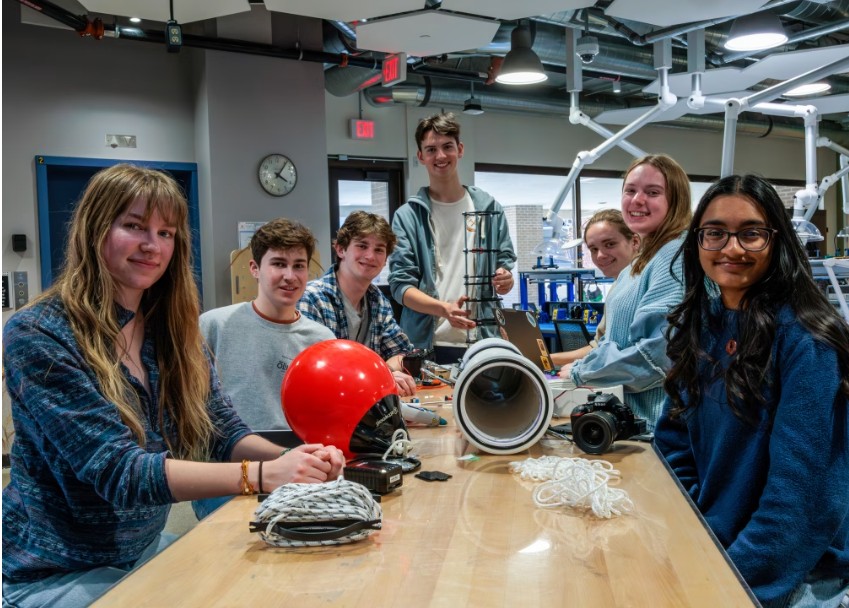
At the University of Wisconsin-Madison, an undergraduate team has built an amphibious imaging system to photograph aquatic life in salt marshes—zones where ecosystems rapidly shift with ocean tides. The project’s lead, geological engineering junior Soren Goldsmith, joined forces with mechanical engineering student Ethan Arterburn and others to design a camera package that can endure submerged deployment for weeks, according to the University of Wisconsin-Madison website.
The device is housed in a sealed PVC housing topped with a dome port over the lens. Inside sits a DSLR, a processing board, and batteries. Custom motion-detection software runs onboard, so the system captures images of fish, crabs, turtles, and other underwater creatures only when motion is detected, saving power and avoiding redundant frames. Since May 2025, these tidal cameras have recorded previously elusive behaviors, including those of the diamondback terrapin, a vulnerable turtle species native to New England marshes.
Goldsmith’s motivation was partly storytelling: while salt marshes are ecologically vital, they lack public visibility. By capturing animals in their natural, submerged habitats, he hopes to build emotional connection and awareness of how salt marshes respond to climate change and encroachment. The technical challenges were significant: underwater, infrared sensors don’t work like they do on land, so the team had to innovate triggers and protection against moisture, leaks, and condensation as the device shifts between environments.
The team used the university’s makerspace facilities to prototype and iterate. They tested the system in Madison’s cold freshwater settings before deploying it in saltwater marshes, learning to differentiate between leaks and condensation and ruggedizing the design.
Looking ahead, Goldsmith sees applications beyond turtles. The system could serve researchers studying aquatic ecology, climate effects on wetlands, invasive species, and more. He aims to improve the system into a reliable research tool that others can deploy. The project also deepened Goldsmith’s appreciation of how engineering tools can help us see, and care about, environments we might otherwise ignore.
