

Industrial and autonomous systems are moving beyond isolated, single-point sensors toward multi-sensor fusion that blends visual data, ranging information, and motion cues into a unified perception of the world. Rather than relying on separate cameras or simple proximity switches, modern automation systems combine inputs from vision systems, LiDAR, inertial measurement units (IMUs), and other sensors to create a richer, more robust understanding of their environment. This trend is reshaping control loops, boosting error detection, and strengthening operational dependability in a wide range of applications from mobile robots to autonomous vehicles, tells Machine Design.
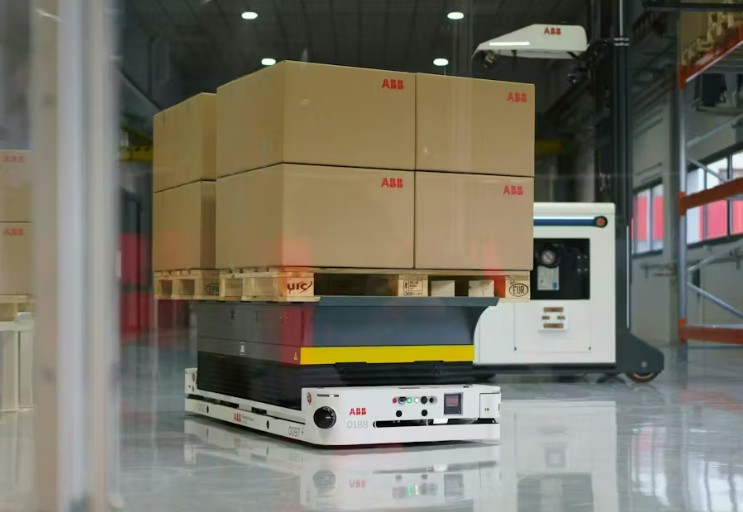
A major driver of the shift is the growing use of 3D vision and depth sensing. Whereas traditional 2D imaging helped with basic inspection tasks, AI-enabled 3D systems capture detailed spatial information that supports real-time navigation, mapping, and decision-making. Cameras combined with structured lighting, stereo vision, or depth sensors generate high-resolution point clouds that feed machine-learning models for tasks such as object detection, obstacle avoidance, and spatial localization. This richer vision capability is increasingly common in autonomous mobile robots (AMRs) and automated guided vehicles (AGVs) that must operate safely in dynamic industrial settings.
LiDAR technology, long associated with autonomous vehicles, is finding broader traction in industrial automation as engineers prioritize high-precision distance measurement and 3D mapping. Solid-state and chip-based LiDAR sensors deliver millimeter-level accuracy and robust performance over extended ranges while becoming smaller and more energy-efficient. They enhance safety and perception in environments where conventional vision systems alone struggle, such as in low light or with reflective surfaces.
Beyond vision and LiDAR, the article also highlights networked sensors with diagnostics that enable two-way communication and condition monitoring, improving uptime and predictive maintenance. Integrated sensor fusion frameworks and AI-powered vision are turning raw sensor data into actionable insights at the edge, enabling machines to perceive, interpret, and react in real time rather than simply record signals.
Together, these emerging sensor trends are giving machines a deeper, more nuanced understanding of their surroundings and driving automation into tasks that once required direct human oversight.
