

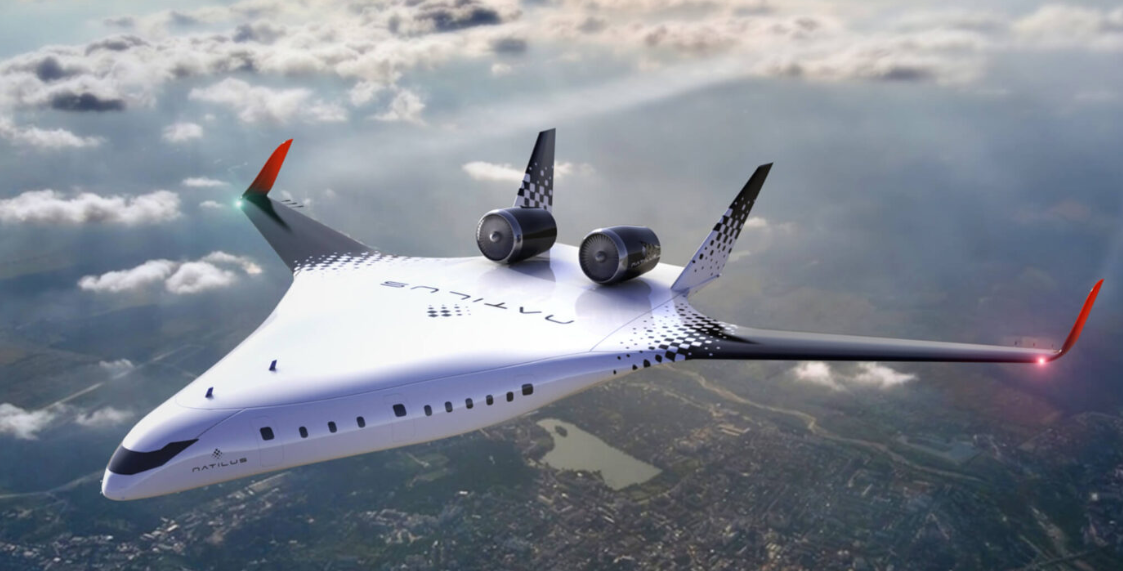
When a company like Siemens, a company that provides serious engineering software, launches an “Industrial Metaverse,” we may just have to pay attention. Meta’s version of a virtual universe could be dismissed as consumer fluff. Even NVIDIA’s Omniverse, though impressive, seemed more like a developer’s playground than a mainstream engineering tool. But Siemens? Siemens has the weight of industry behind it.
We had waited long enough. The Industrial Metaverse was announced over a year ago, at CES 2024, and it immediately sparked questions. Was it AI? Was it an app? Did it include digital twins? Did it tie into Siemens’ Xcelerator platform?
The answer, Siemens insisted, was yes to all.
Through the Looking Glass
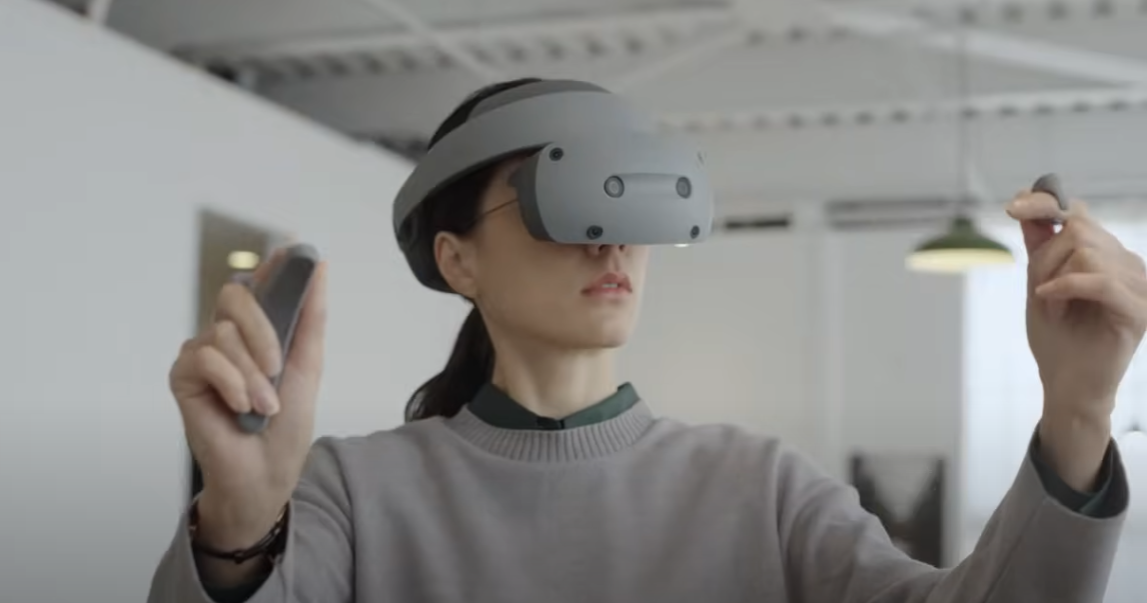
Siemens worked with Sony to develop a unique AR/VR headset designed specifically for industrial use. The company describes its Industrial Metaverse as a “pane of glass” through which engineers can view their data. That pane could be as familiar as the glass on an iPad or as immersive as the Sony’s made-for-Siemens AR/VR headset allows. What appears behind that glass is not diminutive CAD models, but full-size models of the product you are designing, the factory where it will be assembled or the shipyard where it will be built.

To create models of disparate data and varying formats, Siemens Industrial Metaverse needs to be able to make sense of data in whatever form it is stored. We are reminded of The Matrix where Neo, who could read the cascading “digital rain” on his screen and interpret the hidden world behind it, Siemens’ Industrial Metaverse allows engineers to see the designed or built world in ways that were impossible with flat CAD screens and without universal data readers.
From Gaming to Industry
The industrial metaverse did not spring from nowhere. Much of its enabling technology was born in the gaming world. Graphics cards, first developed to speed up rendering for first-person shooters and racing titles, eventually delivered photorealistic imagery to CAD. For years, engineers scoffed at glossy renderings as “pretty pictures.” It was just sour grapes. Today, shaded, colored, realistic images are standard. You can quickly get used to realism, and there can be no going back to black and white wireframes.
Similarly, VR headsets began as toys for wealthy gamer kids who could afford to shut out reality in order to shoot at each other in virtual worlds. But the hardware captured the imagination of the tech industry. If gamers could spend hours immersed for fun, why couldn’t professionals be immersed in their work?
In 2014, Facebook paid $2 billion for Oculus, still fresh off a Kickstarter campaign, in what Mark Zuckerberg framed as “buying the future.” Seven years later, in October 2021, Facebook rebranded as Meta and unveiled its grand vision of Metaverse[i] where we’d all work and play.

The expected success did not pan out, however. The avatars looked more like legless Playmobil figures than human stand-ins. The headsets remained costly and cumbersome. Early adopters complained of motion sickness, preventing prolonged use. Despite hiring thousands of developers, Meta couldn’t create enough compelling reasons to gain widespread acceptance. Layoffs followed. Media headlines declared the “Death of the Metaverse.”
AR/VR Creeps into Engineering
As consumer hype raged, the design and engineering software industry was experimenting. Conferences became gardens where AR/VR bloomed. Vendors eagerly ported applications to VR, while startups sprouted with their own hardware and software solutions.
Microsoft made one of the earliest big splashes with AR[ii]. At its 2015 developer conference in San Francisco, the company unveiled the HoloLens headset. Unlike VR, which shuts out the world, AR overlays digital models on real surroundings
PTC jumped in with both feet. In 2017 it acquired AR firms and shifted its conferences to focus on service and maintenance applications. Then-CEO Jim Heppelmann demonstrated beaming instructions directly into a technician’s headset. Trimble’s Roz Buick donned a hardhat/HoloLens combo in Barcelona to show how AR could guide the placement of structural steel against the open sky.
Neither executive is still with their companies, but one giant design and engineering software, at least, is not giving up.
Enter Siemens
Siemens is betting that its Industrial Metaverse can succeed where others have fallen short. The difference is intent and scale. Siemens is not trying to create a social playground. It is trying to solve practical engineering problems. Also, it has the might of Siemens, not only a software giant but a giant manufacturing conglomerate.
The logic is simple: build it digitally before you build it physically. Whether you’re designing a toaster, an aircraft, or a shipyard, mistakes are cheaper to fix in pixels than in metal, plastic or concrete. If two pipes clash in a virtual refinery, you can move them. If two parts don’t fit in an assembly, you can resize them. Discover the same errors after production tooling is cut, and the costs skyrocket.
The Industrial Metaverse also solves the age-old problem of geography. Engineering teams are often scattered across offices and continents. Each may have its own dataset. Whose version is current? Whose is already outdated? By placing the model in the cloud and letting all stakeholders access a “single source of truth,” Siemens removes ambiguity. Miscommunication shrinks. Collaboration grows.
In this sense, the metaverse is not just visual. It’s organizational.
A Shipload of Data
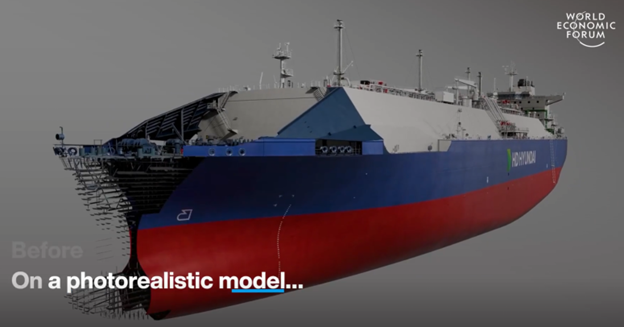 Hyundai Heavy Industries (HHI), the world’s largest shipbuilder, provides a telling example. Facing intense competition from Chinese yards able to build more cheaply, Hyundai sought an edge with digitization.
The idea of donning headsets and collaborating virtually is not new. What is new is the size of the models that can now be shared and explored. Thanks to cloud storage with seemingly infinite storage compared to workstation limits, Siemens can render not just a ship but an entire shipyard.
And these are not coarse, blocky shapes. Siemens claims the Hyundai ship model contains 7.5 million individual parts. It is rendered in exquisite detail. Engineers can slip on headsets and walk life-size through the ship, inspecting every bulkhead and deck.
“To deploy truly innovative product lifecycle management, we have implemented Siemens Digital Industries Software, which allows integrated management across the whole process of sales, design, production, and after-sale services,” said Seung-Seok Kim, general manager at HHI.
The promise is straightforward: spot the flaws early, when corrections are cheap, and defend market share against lower-cost rivals.
Natilus Chambers Seen Full Scale
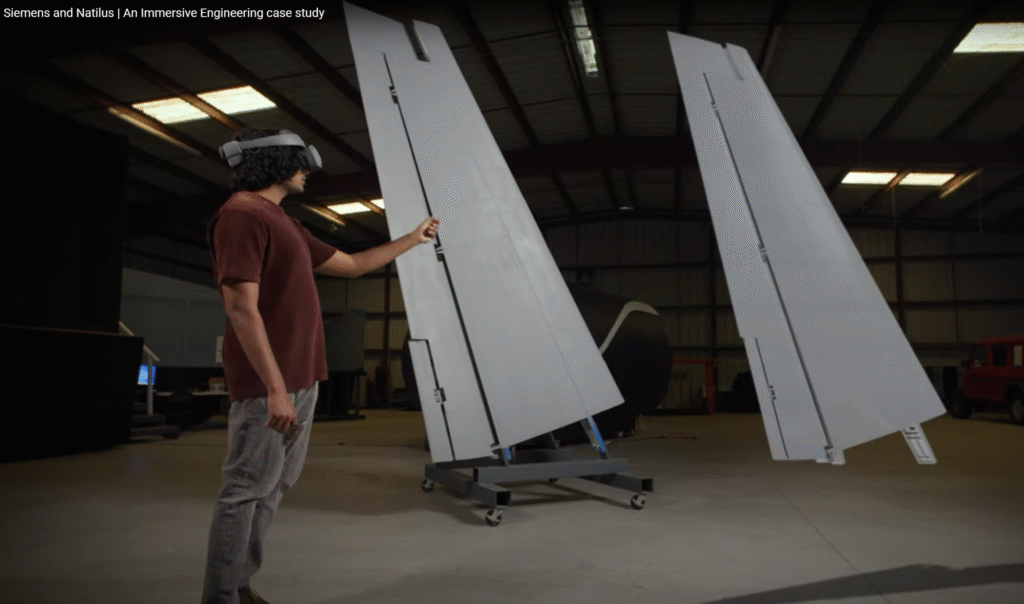
If Hyundai’s shipyards illustrate the Industrial Metaverse at massive scale, San Diego–based startup Natilus shows how it can empower small companies with outsized ambitions.
Natilus is designing blended-wing cargo drones intended to cut freight costs by more than 50%. The aircraft promises more efficient use of space and lighter carbon-composite structures. The company also claims its remotely piloted planes could triple productivity, with one operator flying three aircraft simultaneously.
Air cargo is a tough business. Margins hover around 3–4%. Natilus says its design could lift that to 33%. The market appears interested. Natilus already has over $6 billion in orders for more than 400 aircraft.
At the heart of this effort is Siemens software. The startup relies on the Xcelerator portfolio—NX for CAD, Teamcenter for collaboration, Fibersim for composite design, and Simcenter for simulation. Support from Siemens partner Saratech helps Natilus scale its engineering team without collapsing under the weight of its ambitions.
But the Industrial Metaverse brings it all together.
“Going through the immersion engineering demo, I was really blown away just by how quickly and seamlessly it worked,” said Gabriel Land, head of system architecture. “I was able to really get a good scale of what we’re working on in real time, which was really awesome to see”.
For an aircraft the size of the Kona—85 feet long and 19,000 pounds—scale matters. “Everything looks about half the size on the 2D screen,” said Shankar Singh, aircraft systems engineer. “Getting an idea for the actual volume was very eye-opening”.
The metaverse is also a powerful sales tool. Investors and customers without technical backgrounds can “walk” through a virtual aircraft rather than squint at CAD drawings. “Translating CAD data to real life, it’s not the same as being able to put them in the pilot seat, getting them in VR and walking up to the actual aircraft,” Singh added.
Looking ahead, Natilus sees applications in production. “Being able to see real time on a bare panel where certain cables need to go… where certain terminations are as well,” said Land, could streamline manufacturing.
And for distributed teams, the collaborative potential is clear. “Using this AR experience, we can both poke our heads around so we can clarify a lot of things that we may not be able to do just looking at the screen,” Singh said.
CEO Aleksey Matyushev summed up the strategic value: “This type of technology is part of our story, to help make those sales and keep those conversations with customers really energetic”.
The Broader Context
It is tempting to dismiss the metaverse entirely, given its consumer missteps. Meta’s billions yielded little more than awkward avatars and headlines. But in engineering, the concept may finally have legs.
What Siemens is doing is not building an escape from reality but constructing a bridge to it. Its Industrial Metaverse is less about fantasy and more about fidelity. It allows engineers to work across borders, companies to defend market share, and startups to look bigger than they are.
What’s changed since the hype cycle of the 2010s is both scale and utility. Cloud storage can now handle shipyards with millions of parts. Headsets are lighter and more specialized. Software integrates seamlessly into existing CAD and PLM workflows. And industries under cost and competitive pressure are motivated to adopt whatever tools can give them an edge.
The consumer metaverse may have stumbled, but Siemens is showing that in the industrial world, AR/VR can have a real benefit. By blending digital twins, immersive visualization, and cloud-scale collaboration, Siemens has turned what was once a novelty into a tool with immediate engineering and economic impact.
From Hyundai’s shipyards to Natilus’s futuristic cargo planes, the Industrial Metaverse provides a measurable improvement in process and product.
Siemens, in short, is building a virtual workshop—one that may well define the next era of engineering.
___________________
[i] Metaverse is a portmanteau: Meta, the company’s name plus universe.
[ii] AR, or augmented reality, still allowed you to walk around with your mouth agape but let you see enough of your surroundings that you wouldn’t trip the coffee table.
