

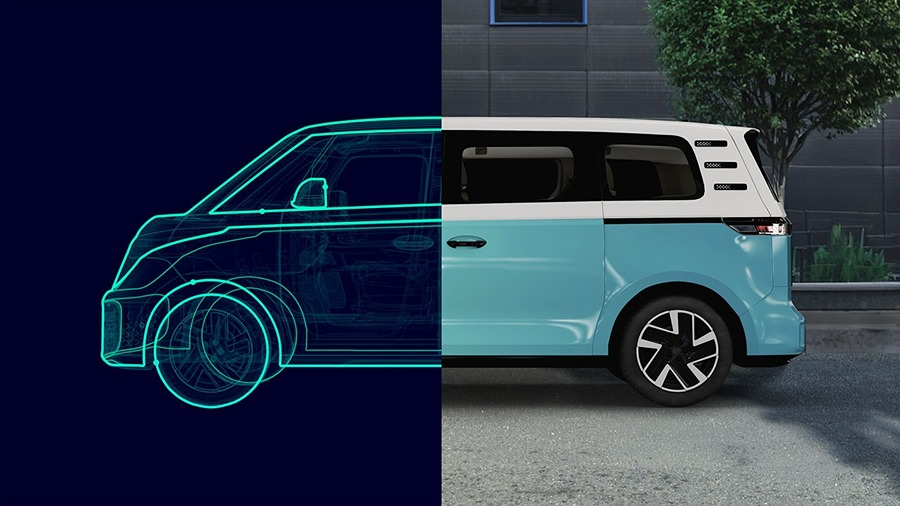
PLANO, TX, Dec 22, 2025 – Siemens introduced PAVE360 Automotive technology, a pre-integrated digital twin platform for automotive hardware and software integration. PAVE360 allows engineering teams to test, validate, and connect hardware and software in vehicle development.
PAVE360 Automotive aims to speed software-defined vehicle (SDV) development by enabling automakers to virtually integrate a full vehicle system that mirrors the hardware. The approach lets teams test and develop ADAS, automated driving (AD), and in-vehicle infotainment (IVI) software without first building their own digital twins, which can reduce time to market.
“The automotive industry is at the forefront of the software-defined everything revolution and Siemens is delivering the digital twin technologies needed to move beyond incremental innovation and embrace a holistic, software-defined approach to product development,” said Tony Hemmelgarn, president and CEO, Siemens Digital Industries Software. “PAVE360 Automotive will empower automotive companies to innovate with confidence, agility and scale, to realize the full potential of the SDVs and set the standard for what’s possible across all industries.”
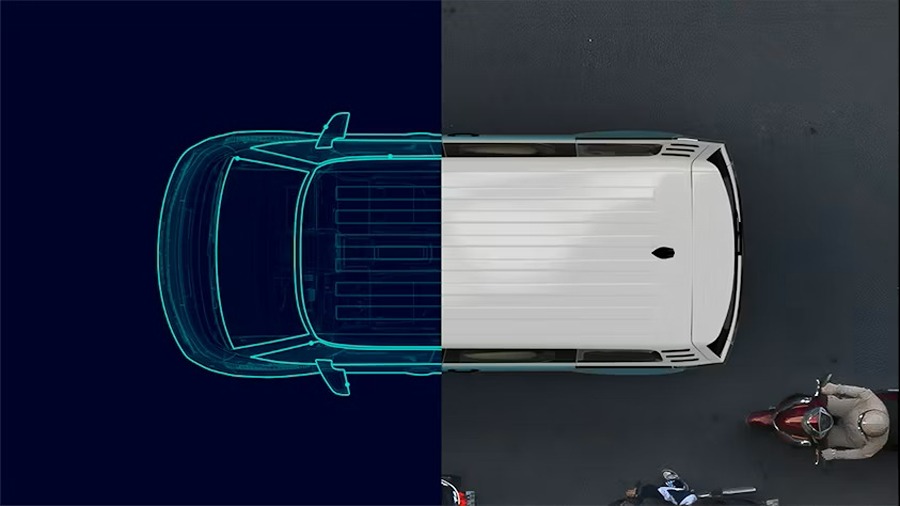
PAVE360 Automotive: A Virtual Blueprint For Digital Twin Development
PAVE360 Automotive uses Siemens digital twin technology to help automakers to:
- Accelerate early vehicle systems development using customizable ADAS, AD, and IVI virtual reference designs
- Unify development, improve efficiency, and support cloud collaboration with a single digital twin
- Customize and scale by adding software, models, and hardware as needed
- Speed up software development using hardware-like simulation of automotive IP, including the Arm Zena Compute Subsystem (CSS)
- Validate designs by connecting digital twins to hardware and vehicle tests
Existing technologies can make system-level digital twins for software-defined vehicles time-consuming to build and validate. PAVE360 Automotive offers a pre-integrated system-level digital twin that supports deployment from the start of development, reducing time, effort, and cost.
PAVE360 Automotive Using Arm
Siemens is integrating Arm Zena Compute Subsystems (CSS) with PAVE360 Automotive following prior collaborations with Arm on accelerated virtual environments. Access to Arm Zena CSS within a digital twin environment can reduce software development timelines by up to two years.
“As vehicles become increasingly AI-defined, automakers and silicon partners need new ways to manage rising complexity without slowing innovation,” said Suraj Gajendra, vice president of products and solutions, physical AI business unit, Arm. “With Arm Zena CSS available inside Siemens’ pre-integrated PAVE360 Automotive environment, partners can not only customize their solutions leveraging the unique flexibility of the Arm architecture but also validate and iterate much earlier in the development cycle, helping them get to market sooner.”
Availability
Siemens plans general availability of PAVE360 Automotive in Feb. 2026, with a live demonstration at CES 2026. The platform combines the Innexis software environment with supporting technologies to enable system-level digital twins for ADAS, AD, and IVI.
Source: Siemens
About Siemens Digital Industries Software

Siemens Digital Industries Software, a business unit of Siemens AG, provides industrial software, hardware and related services through the Siemens Xcelerator platform. The company’s portfolio includes product lifecycle management, electronic design automation, simulation and digital twin tools, manufacturing operations management and low-code application development. These products support design, engineering and production workflows across sectors such as aerospace and defense, automotive, electronics and semiconductors, machinery, medical devices and process manufacturing. Siemens Digital Industries Software traces its origins to 1963 as United Computing, later becoming Siemens PLM Software in 2007 before adopting its current name. It supplies technologies that help organizations manage product, process data, and improve development and manufacturing efficiency across a range of industrial applications.
About Siemens Digital Industries
Siemens Digital Industries (DI), a division of Siemens AG, focuses on industrial automation and digitalization. Based in Nuremberg, Germany, the division provides software, automation systems, and digital services that support the full product and production lifecycle—from design and engineering to manufacturing and maintenance. With a history extending over six decades, Siemens DI serves key sectors including automotive, aerospace, pharmaceuticals, energy, and electronics. Its technologies, such as the Xcelerator platform and SIMATIC automation systems, are designed to integrate physical and digital processes, enabling data-driven manufacturing and operational efficiency. The division reports annual revenues exceeding €18 billion and employs approximately 70,000 people globally. Its portfolio supports manufacturers in implementing Industry 4.0 strategies by linking simulation, automation, and real-time data in scalable systems.
About Siemens AG
Siemens AG, headquartered in Munich and Berlin, Germany, is a global technology company focused on industry, infrastructure, mobility and healthcare. Founded in 1847, the company develops industrial automation systems, digitalization technologies, energy-efficient equipment and medical diagnostic systems. Siemens applies industrial and generative AI to improve efficiency and operational performance across manufacturing, infrastructure and transportation. Its work combines physical systems with digital tools to support industrial processes, smart infrastructure and connected mobility. Siemens holds a majority stake in Siemens Healthineers, a medical technology company specializing in diagnostics and healthcare systems. The company employs more than 300,000 people worldwide and has operations in Germany.
