

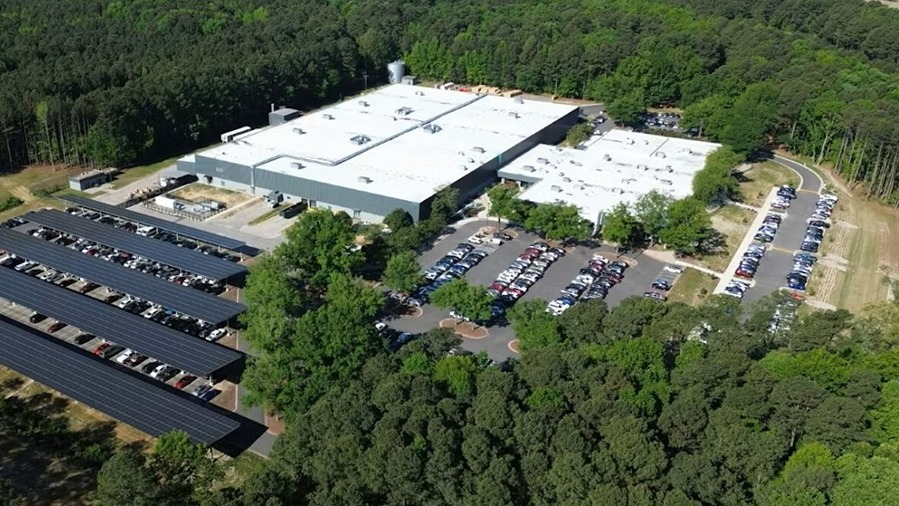
North Carolina, May 14, 2026 – Siemens brought a 1.25-megawatt microgrid online at its U.S. Electrification and Automation headquarters in Wendell, North Carolina. The system combines a solar photovoltaic carport array with a 3.9-megawatt-hour battery energy storage system and connects to Duke Energy’s distribution network in the Carolinas.
The microgrid adds on-site solar generation, battery storage and backup power for the Wendell factory, which produces medium-voltage equipment. Siemens said the project, combined with other campus energy measures, helped the site reach carbon-neutral operations and reduce grid energy consumption by 2.5 MWh annually. The project also supports net-zero carbon footprint by 2030.
“There is no question that we must do more to lower energy costs for North Carolinians and strengthen the resilience of our electric grid,” said Congresswoman Ross. “I’m grateful to see Siemens stepping up in Wendell with innovative investments that will expand clean, reliable energy. In Congress, I will keep working to advance commonsense solutions that drive down costs and accelerate North Carolina’s clean energy future.”
The Wendell system can use net energy metering to send excess electricity to the grid for use by other customers. Siemens said the installation is among the largest solar and storage industrial microgrids connected to Duke Energy’s distribution network.
“The microgrid that we’ve integrated here at our Wendell campus is one of the more advanced microgrids installed in the market today,” said Brian Dula, Siemens USA’s president of electrification and automation. “It’s a true showcase of Siemens’ end-to-end portfolio of products, from generation to consumption and demonstrates not only how we’re making our own operations more efficient but also displays what we can do for our customers.”
Siemens built the microgrid with its SICAM A8000 microgrid controller, fire protection systems, low-voltage switchboards, low-voltage bolted pressure switches, KACO string inverters and SIPROTEC universal relays. The installation also uses Siemens Desigo building management software and Electrification X cloud analytics to exchange data between the microgrid and facility systems.
“Given the strong growth we’re experiencing across the regions we serve, protecting customer reliability in a cost-effective manner is a core focus of Duke Energy’s grid modernization efforts,” said Venu Ghanta, Duke Energy’s vice president of North Carolina regulatory affairs and policy. “We’ve had a tremendous partnership for decades with Siemens, and we appreciate their focus on delivering solutions that improve grid resiliency.”
Siemens also connected on-site VersiCharge electric vehicle chargers to the microgrid, allowing EVs to charge from solar generation. The setup displays charging status and dynamic load management data in the site’s Customer Experience Center.
The Wendell headquarters recently added its customer experience center, power academy workforce training classrooms, conference center and manufacturing lines. The facility has added roles over the past several years and plans to continue workforce expansion through 2028 and beyond. Siemens is also working with Wake Technical Community College on energy reliability, efficiency and workforce training.
Source: Siemens
About Siemens

Siemens Corporation, the U.S. subsidiary of Siemens AG, operates across industry, infrastructure, transportation, and healthcare sectors. Founded in 1847, Siemens AG has more than 175 years of history and is headquartered in Munich, Germany. Its U.S. operations are based in Washington, D.C. The company maintains 24 manufacturing sites in the United States and employs over 50,000 people, serving customers in all 50 states and Puerto Rico. Siemens focuses on integrating digital and physical technologies to support customer needs in efficiency, urban development, and sustainable transportation. The company applies industrial AI – including generative AI – to use cases across sectors.
