

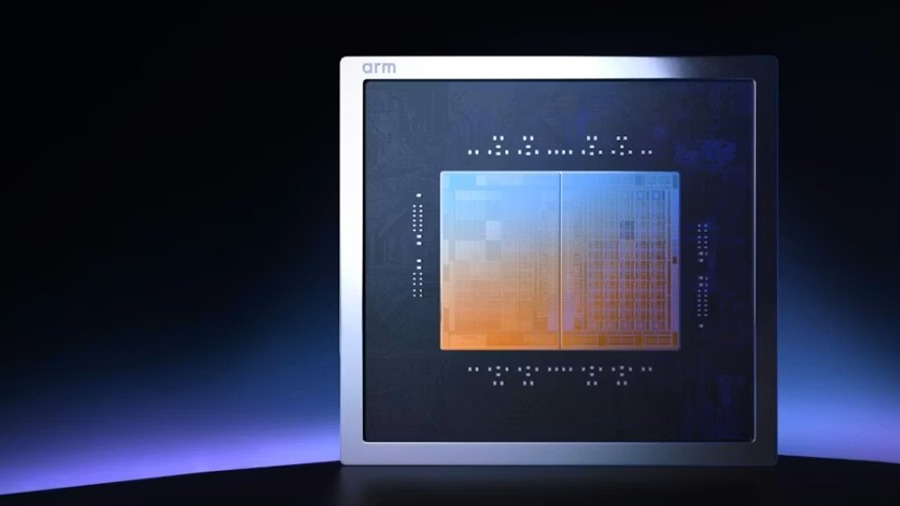
PLANO, TX, May 11, 2026 – Siemens used its Veloce Strato CS hardware-assisted verification system to help Arm validate the Arm AGI CPU before tapeout, targeting agentic AI and cloud data center workloads. The work verified the Neoverse Compute Subsystem (CSS) V3-based CPU from subsystem to full-system level, including performance, latency and power targets needed for hyperscale deployment.
Arm used Siemens hardware-assisted verification, emulation and prototyping tools for its Neoverse V-series CSS. The companies developed verification workflows to manage the complexity of advanced Arm CPU designs for cloud infrastructure.
“The scale and complexity of modern AI compute platforms demand an enhanced level of verification,” said Karima Dridi, vice president of productivity engineering, Arm. “Siemens’ solutions enabled full-system verification of the Arm AGI CPU at scale using multiple towers of Veloce Strato CS, helping to ensure it meets the performance and efficiency requirements of hyperscale deployments.”
The Arm AGI CPU uses multi-die CSS designs with Neoverse V-series cores, high-speed interconnects, PCIe Gen6, NVMe and CXL. These components require verification at a scale and fidelity that traditional EDA tools alone cannot provide.
Siemens’ Veloce proFPGA CS prototyping platform supports pre-silicon software development. The FPGA-based prototypes run at near-real-time speeds, allowing software teams to begin validation, driver development and system bring-up months ahead of silicon availability.
“The Arm AGI CPU exemplifies the engineering ambition driving agentic AI innovation,” said Jean-Marie Brunet, senior vice president and general manager of Hardware-Assisted Verification, Siemens Digital Industries Software. “Working with Arm helps to ensure Siemens’ verification technology can verify complete Neoverse CSS subsystems in a full SoC model – at industry-leading performance and channel bandwidth. This achievement reflects our shared commitment to pushing the boundaries of what’s possible in AI infrastructure and our solutions’ ability to scale with customers across the Arm ecosystem as they tackle increasingly complex architectural challenges.”
Verification Tools Support Arm Workflows
Siemens said its verification and implementation tools integrate into Arm CPU design workflows. The same Veloce Strato CS technologies used for the Arm AGI CPU are available to Arm licensees, SoC designers and ecosystem partners.
For hyperscalers building custom silicon on the Arm Neoverse CSS platform, similar verification technologies can be used to test full SoC models before production. The tools support verification flows for Arm-based AI infrastructure.
Source: Siemens
About Siemens AG

Siemens AG is a technology company founded in 1847 and headquartered in Munich and Berlin, Germany. The company develops products and services in industrial automation, electrification, digital systems, and mobility. Its offerings include automation systems, industrial software, building technologies, rail transport systems, and power distribution solutions. Siemens also provides financial services and supports infrastructure projects. It serves industries such as manufacturing, energy, transportation, construction, and healthcare. The company works with enterprises, utilities, governments, and infrastructure operators worldwide. Siemens operates in more than 190 countries. It applies digital tools and AI to industrial and infrastructure use cases. Siemens holds a majority stake in Siemens Healthineers, a publicly listed healthcare technology company. Siemens has about 318,000 employees globally.
About Siemens Digital Industries Software
Siemens Digital Industries Software, a business unit of Siemens AG, provides industrial software, hardware and related services through the Siemens Xcelerator platform. The company’s portfolio includes product lifecycle management, electronic design automation, simulation and digital twin tools, manufacturing operations management and low-code application development. These products support design, engineering and production workflows across sectors such as aerospace and defense, automotive, electronics and semiconductors, machinery, medical devices and process manufacturing. Siemens Digital Industries Software traces its origins to 1963 as United Computing, later becoming Siemens PLM Software in 2007 before adopting its current name. It supplies technologies that help organizations manage product, process data, and improve development and manufacturing efficiency across a range of industrial applications.
About Arm

Arm is a semiconductor and software design company that develops and licenses processor architectures and related technologies. Founded in 1990, it provides CPU designs, GPUs, system IP and software tools for electronic devices. Its technologies support system-on-chip design and are used in smartphones, data centers, automotive systems and embedded devices. Arm serves semiconductor companies, OEMs and technology firms across multiple industries. The company licenses its intellectual property rather than manufacturing chips, enabling partners to build custom processors. Its designs are used in consumer electronics, cloud infrastructure and Internet of Things devices. Arm is headquartered in Cambridge, UK. It employs about 8,300 people globally.
