

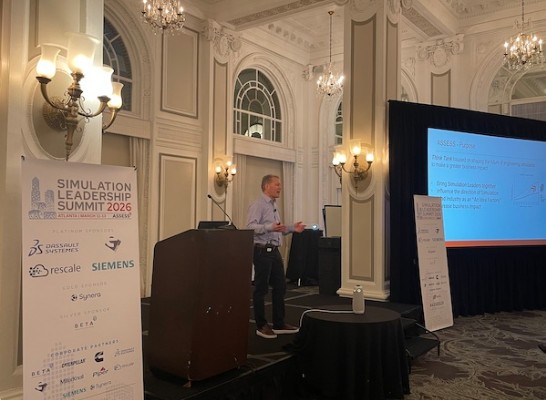
Engineering simulation is evolving from a specialized technical function into a core driver of business value. The article from Digital Engineering 24/7 captures key themes from the NAFEMS ASSESS 2026 conference, where industry leaders emphasized aligning simulation efforts with broader organizational goals.
A central message is that simulation must move beyond its traditional role as a late-stage validation tool. Companies are increasingly using simulation earlier in the design process to guide decisions, reduce physical prototyping, and accelerate development timelines. This shift toward simulation-led design enables engineers to explore more design options while minimizing costly rework.
The conference also underscored the importance of connecting simulation outcomes to business metrics. Rather than focusing solely on technical accuracy, organizations are measuring simulation success in terms of cost savings, efficiency gains, sustainability improvements, and faster time to market. This alignment ensures that simulation contributes directly to competitive advantage rather than remaining an isolated engineering activity.
Another key theme is integration. Simulation is becoming more tightly linked with digital engineering frameworks, including product lifecycle management and the digital thread. This integration allows data to flow seamlessly across design, analysis, and manufacturing, creating a more cohesive development environment and improving collaboration across teams.
The article also highlights ongoing challenges. Many organizations still struggle with scaling simulation across the enterprise due to fragmented workflows, limited expertise, and cultural resistance. Addressing these barriers requires investment in training, improved processes, and leadership commitment to embedding simulation into decision-making.
Ultimately, the discussions at ASSESS 2026 point to a broader transformation. Simulation is no longer just a tool for engineers; it is becoming a strategic capability that informs business decisions at every stage of product development. As adoption grows and integration improves, simulation is positioned to play a defining role in shaping the future of engineering and innovation.
