

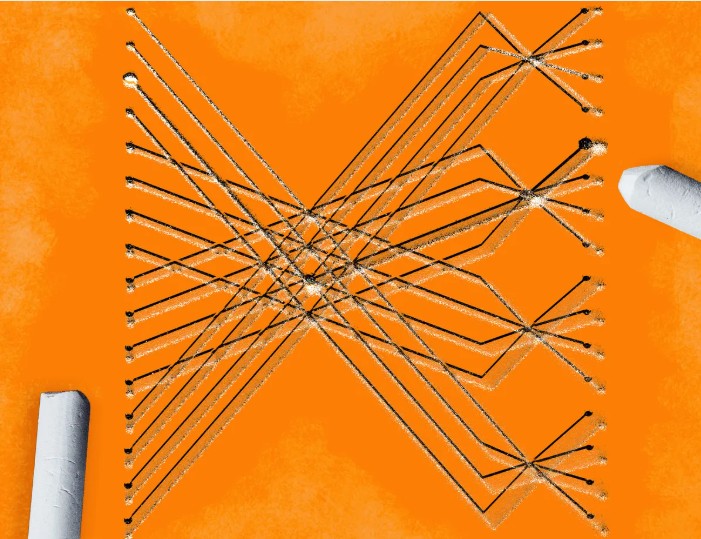
The Fast Fourier Transform, or FFT, just received recognition as an IEEE Milestone—an honor that cements its status as one of the most impactful algorithms in computing history. First demonstrated in 1964 by John W. Cooley (IBM) and John Tukey (Princeton), this algorithm dramatically sped up computing of the Discrete Fourier Transform (DFT), making it roughly 100 times faster than older methods, reports IEEE Spectrum.
At its core, FFT converts time- or space-domain signals into frequency information. It cut the computational cost from quadratic O(N²) to near-linear O(N log N), a radical leap that reshaped data processing across many fields.
That jump wasn’t just academic. FFT is now baked into nearly every device with digital signal needs, from CT scanners, MRIs, and video streaming to compression standards like JPEG and MPEG. Today, it’s equally vital to technologies shaping the future: AI, quantum computing, autonomous vehicles, and 5G wireless communications.
The IEEE Milestone was formally presented during a May 2025 ceremony at Princeton University, honoring the first practical implementation in 1964. IEEE President Tom Coughlin emphasized the breakthrough nature of the Cooley-Tukey algorithm in drastically reducing computation and enabling diverse applications once out of reach.
Cooley and Tukey’s innovation didn’t just introduce an efficient algorithm. It made frequency-domain analysis practical for real-world, real-time use, an enabler of modern communications, medicine, and data science. Now, six decades later, it continues to serve as the backbone for signal processing, visualization, and emerging technologies.
