

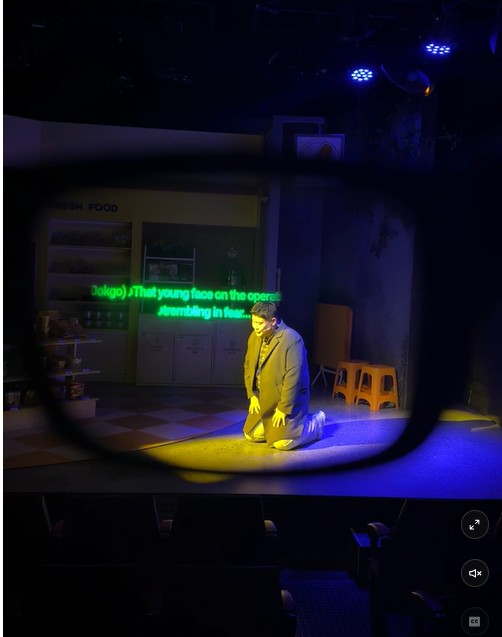
A new wave of AI-powered smart glasses is beginning to transform how audiences experience live theater, particularly in South Korea’s rapidly expanding cultural export industry. Designed to provide real-time translations directly on the lenses, the technology allows viewers to follow performances in Korean without relying on traditional supertitles or translated scripts, tells The New York Times (full article available to subscribers).
The system, developed by Xpert Inc., uses AI to listen for dialogue cues and display synchronized translations in multiple languages. Unlike conventional subtitle systems that require manual timing, the glasses automate the process, aiming to create a seamless viewing experience. Early users report that the technology improves immersion by eliminating the need to look away from the stage, though occasional issues with timing and accuracy remain.
The initiative has been supported by the Korea Tourism Organization, which funded a pilot program introducing the glasses in select productions. Theater producers have since embraced the concept, seeing it as a way to attract international audiences without sacrificing the original Korean language. For many, this approach aligns with a broader goal: exporting Korean theater while preserving its cultural identity rather than adapting it entirely for foreign markets.
Interest in Korean musicals is growing, fueled by global successes such as “Maybe Happy Ending,” which transitioned from a small Seoul theater to Broadway. Increased funding and industry optimism are helping smaller productions explore international opportunities, with AI translation tools playing a key role in expanding accessibility.
Despite its promise, the technology still faces challenges. Users note discomfort when wearing the glasses over prescription lenses, along with occasional translation errors and missed ad-libbed dialogue. Developers are working on lighter designs and improved accuracy, while competitors in Europe and the United States are introducing similar solutions.
The broader implication extends beyond Korean theater. If refined, AI translation glasses could redefine live performance globally, allowing audiences to engage with content in its original language regardless of linguistic barriers. This shift suggests a future where cultural exchange relies less on adaptation and more on real-time understanding, preserving authenticity while widening access.
