

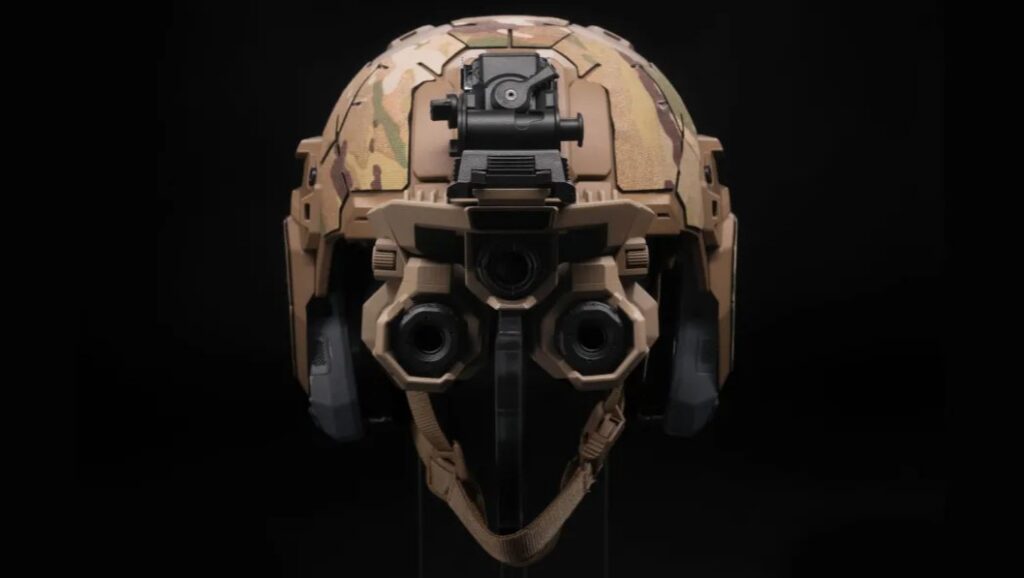
The race to develop advanced smart glasses is increasingly extending beyond consumer technology into military applications. According to the MIT Technology Review article, defense technology company Anduril Industries and Meta are working on augmented reality systems designed to support soldiers in combat environments, reflecting a broader convergence between Silicon Valley hardware development and modern warfare.
The collaboration centers on wearable systems capable of delivering real-time battlefield information directly into a soldier’s field of vision. Instead of relying on handheld radios, maps, or separate monitoring devices, troops could potentially receive navigation guidance, drone feeds, targeting information, and unit coordination data through lightweight eyewear. The goal is to reduce cognitive overload while accelerating decision-making during high-pressure operations.
The article explains that Anduril brings military systems expertise to the partnership, particularly in autonomous defense technologies, sensors, and battlefield networking. Meta contributes years of investment in augmented and virtual reality hardware, including optical displays, wearable interfaces, and spatial computing technologies developed initially for consumer products. Together, the companies are attempting to adapt those capabilities for defense environments where durability, latency, and operational reliability are critical.
A major challenge involves balancing technological sophistication with practical battlefield requirements. Military smart glasses must function under harsh environmental conditions, maintain long battery life, avoid distracting users, and securely process sensitive information. Unlike consumer augmented reality products, combat systems must also operate effectively under stress, poor visibility, and rapidly changing tactical situations.
The article also highlights growing Pentagon interest in wearable computing and human–machine integration. Military planners increasingly view augmented reality systems as tools for improving situational awareness and coordination across distributed operations involving drones, autonomous systems, and networked sensors. Smart glasses could eventually become part of a larger digital battlefield ecosystem linking soldiers with AI-assisted intelligence and autonomous platforms in real time.
At the same time, the project reflects deeper changes occurring across the defense sector. Commercial technology firms are becoming more directly involved in military development, blurring boundaries between consumer electronics innovation and national security infrastructure. The evolution of smart glasses may therefore shape not only the future of personal computing but also the future structure of warfare itself.
