

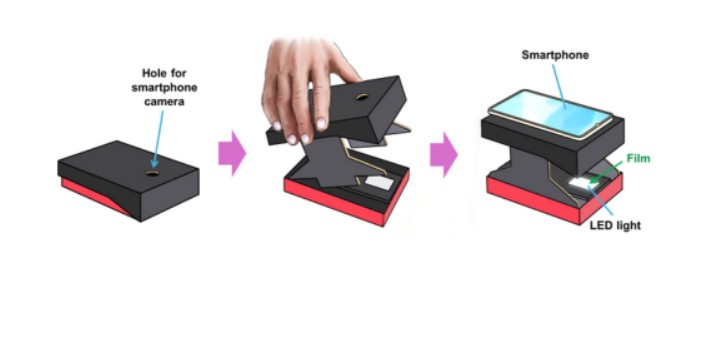
Researchers at Hiroshima University created a simple, inexpensive radiation dosimetry tool that turns a smartphone into an emergency radiation reader. The system pairs a piece of radiochromic film with a foldable, battery-powered scanner and a smartphone camera. The film changes color when exposed to radiation, and the phone’s image can be processed with software to measure dose levels up to about 10 Gray—doses high enough to cause serious health effects. The goal is a field-ready method that can be used in mass-casualty or disaster scenarios where traditional lab equipment and infrastructure might be unavailable.
Traditional radiation dosimeters are often costly and require lab analysis, which limits rapid, widespread assessment in emergencies. The Hiroshima University team, including doctoral student Hassna Bantan and Professor Hiroshi Yasuda of the Research Institute for Radiation Biology and Medicine, stressed simplicity, accessibility, and cost-effectiveness when designing the system. A user can place the radiochromic film inside the portable scanner, illuminate it with built-in LEDs, and capture an image with a smartphone. An app can then quantify the radiation dose based on color changes in the film.
Tests across different smartphone models showed consistent readings, particularly when using the cyan color channel for analysis. While professional desktop scanners yield more precise measurements, the smartphone-based approach still delivers adequate accuracy for emergency assessments and costs under about $70 in components. The researchers believe this affordability and portability make the system viable even where resources are scarce or infrastructure is compromised.
Professor Yasuda said the team is now working on standardizing protocols and ensuring reliability under a range of environmental conditions. By equipping responders and affected individuals with a tool that delivers immediate dose estimates, the system could support faster decision-making about medical care and safety after large-scale nuclear or radiological incidents.
