

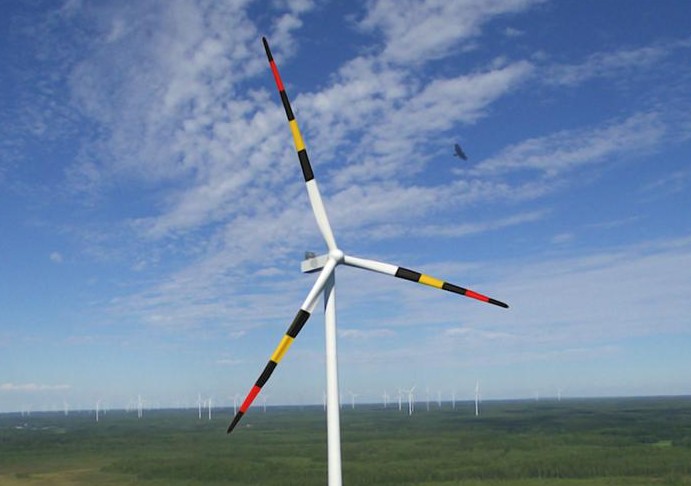
A new study highlighted by Popular Science suggests that wind turbines painted with warning patterns inspired by venomous snakes may help reduce deadly collisions with birds. The research explores a biologically inspired alternative to conventional mitigation methods, using visual signals evolved in nature to influence bird behavior before dangerous encounters occur.
Bird strikes remain one of the most persistent environmental concerns surrounding wind energy infrastructure. Although wind power contributes far fewer bird deaths than fossil fuel systems and urban hazards such as buildings or domestic cats, collisions involving turbines still threaten vulnerable species, especially raptors and migratory birds. Researchers have previously tested solutions such as radar systems, temporary shutdowns during migration periods, and painting a single blade black. This new study takes a different approach by borrowing warning-color strategies from nature itself.
The research team, led by scientists from the University of Helsinki and the University of Exeter, examined whether birds would avoid turbine blades displaying bold color combinations associated with toxic or dangerous animals. Using specially designed touchscreen systems for birds, researchers presented wild-caught great tits with simulated spinning turbine blades featuring different visual patterns. These included standard white blades, red-striped blades, single black blades, and a newly developed red-black-yellow biomimetic design modeled after aposematic warning signals commonly found in snakes and insects.
The results were striking. Birds consistently approached plain white blades more frequently than patterned designs, while the snake-inspired warning pattern produced the strongest avoidance behavior. Researchers also found that birds hesitated longer before approaching the biomimetic blades, suggesting that the color combinations triggered an instinctive caution response. According to the scientists, this demonstrates that relatively simple visual modifications could substantially reduce collision risks without requiring complex sensor systems or operational shutdowns.
The study reflects a growing movement toward ecological engineering strategies that integrate behavioral science with renewable energy design. Rather than relying entirely on detection technologies, the researchers argue that nature itself may already provide optimized visual signals that guide wildlife away from dangerous human infrastructure.
