

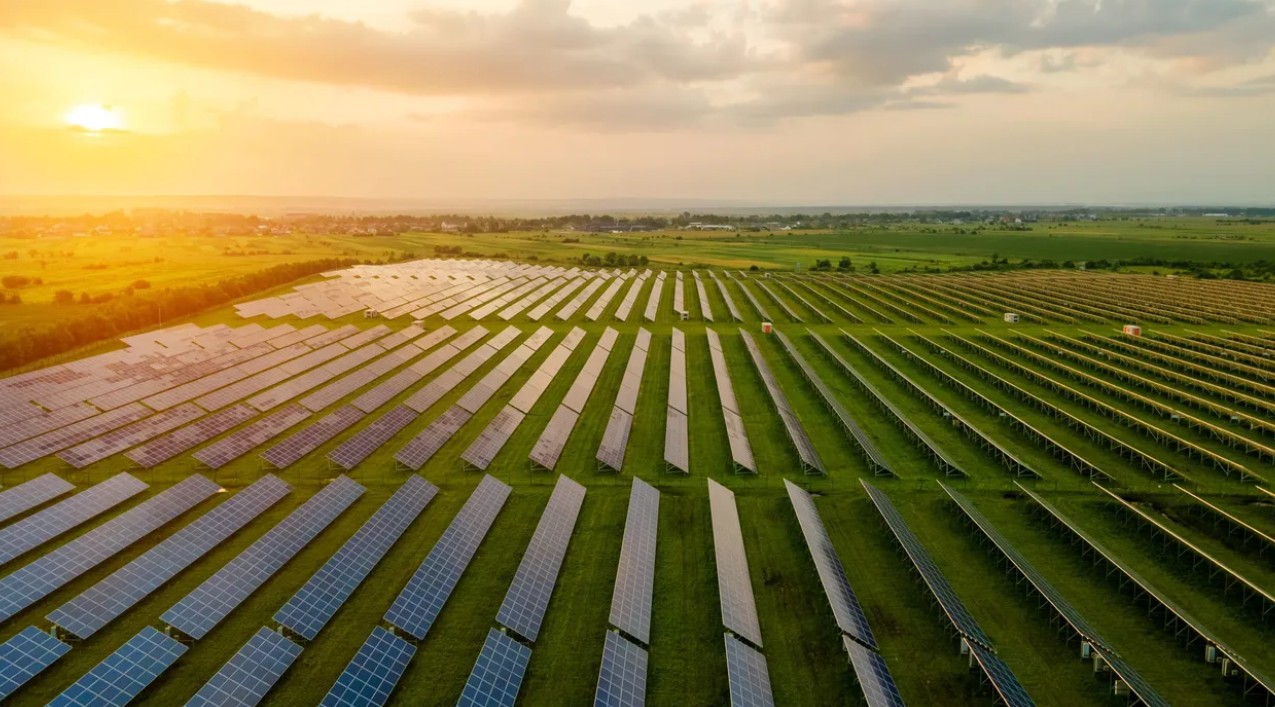
Agrivoltaics, which combines solar panels and crops on the same land, could make agricultural land more productive while protecting plants from extreme heat. A new study described by Live Science developed a model to examine the complex interactions among solar panels, crops, soil, air, water, and carbon dioxide within these shared environments.
Solar farms require substantial amounts of land that could otherwise support food production. Agrivoltaics offers an alternative by growing crops beneath or between photovoltaic panels. Previous research has indicated that panels can provide beneficial shade and help soil retain moisture. The new model goes further by simulating microclimates and examining their effects on crops, solar panels, and agricultural workers.
Researchers validated the model using real-world measurements, including leaf temperatures from Davis, California, and soil temperatures from Chicago City, Minnesota. They then modeled a hypothetical tomato farm using weather conditions from a hot, humid day in Princeton, New Jersey.
The results showed several potential advantages. Tomato leaves beneath solar panels were 1.84°C cooler overall during the day and up to 7.56°C cooler during peak afternoon heat. This reduced water loss through evapotranspiration by 22.4%. Although the plants received 47% less sunlight, their carbon uptake declined by only 31%, suggesting that reduced heat stress partly compensated for the shade.
The crops also benefited the solar equipment. Panels positioned above vegetation were 5.6°C cooler during daytime than panels installed over bare soil. Lower temperatures allowed the panels to recover about 15% of the efficiency normally lost under hotter conditions.
Agrivoltaics could also improve working conditions. Average perceived temperatures for people fell by 4.46°C during working hours. The researchers say their model can now be applied to different crops, climates, and solar configurations, helping designers determine where combining food production with renewable energy could deliver the greatest benefits.
