

Intense bursts of solar radiation have disrupted global air travel by exposing a vulnerability in Airbus A320 flight-control computers, tells Tech Xplore. In late November, regulators and airlines grounded about 6,000 A320 family jets, roughly half of that model’s worldwide fleet, after investigators found that solar energetic particles could corrupt flight-control data and potentially cause dangerous changes in aircraft pitch.
The issue came to light following an incident on a JetBlue A320 flight from Cancun to Newark. During that flight, the aircraft unexpectedly lost altitude, injuring passengers. Post-flight analysis suggested that a specific flight-control unit became susceptible to data corruption when exposed to a surge of solar radiation, especially combined with a recent software update. Authorities responded by mandating immediate software rollbacks or hardware replacements before any aircraft could return to passenger service.
In Australia, this led to about 90 flights being canceled and more than 15,000 passengers affected while engineers worked overnight to apply fixes. The rapid industry response prevented further incidents and no fatalities. But the episode serves as a stark reminder that space weather, once mainly a concern for satellites and deep-space missions, now has real operational impacts on commercial aviation and other sectors reliant on sensitive electronics.
At cruising altitudes between 10,000 and 12,000 meters, microelectronics face far higher levels of secondary cosmic radiation than on the ground. Most systems use redundancy and error-correction to handle random “soft errors,” but intense solar events can overwhelm these protections in rare circumstances. As aircraft systems become more compact and low-voltage, susceptibility to radiation-induced errors increases.
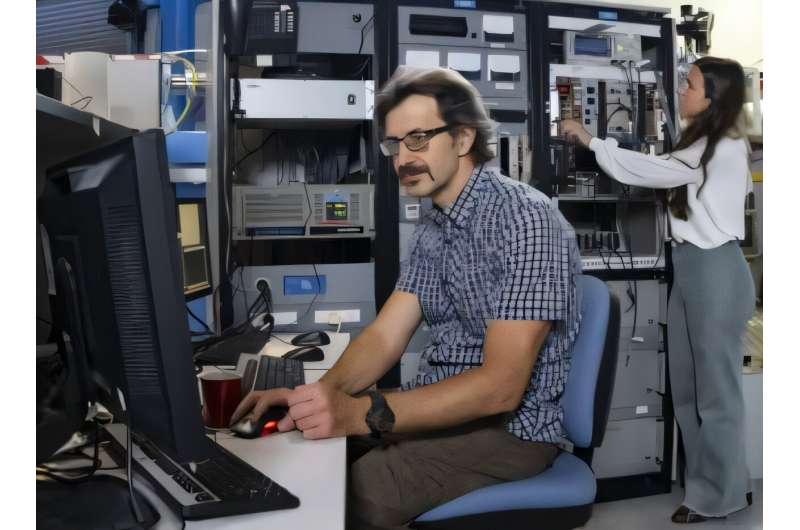
Radiation testing facilities such as the Australian Nuclear Science and Technology Organisation’s Center for Accelerator Science are crucial for reproducing space-like radiation environments and validating hardware resilience. This event highlights the need for rigorous radiation-hardening and testing as part of aviation system design going forward.
