

As global momentum toward renewable energy rises, conventional flat-panel solar installations often come at a steep environmental cost—deforestation. In South Korea, for example, hundreds to thousands of hectares were cleared for solar farms between 2016 and 2018, undermining natural carbon sinks and contributing to habitat loss, soil erosion, and ecosystem disruption.
Enter solar trees—a novel solar design mimicking natural tree morphology. They feature elevated canopies composed of photovoltaic panels that allow sunlight to filter through to underlying vegetation. This design supports simultaneous solar energy generation and vegetation preservation, tells Tech Xplore.
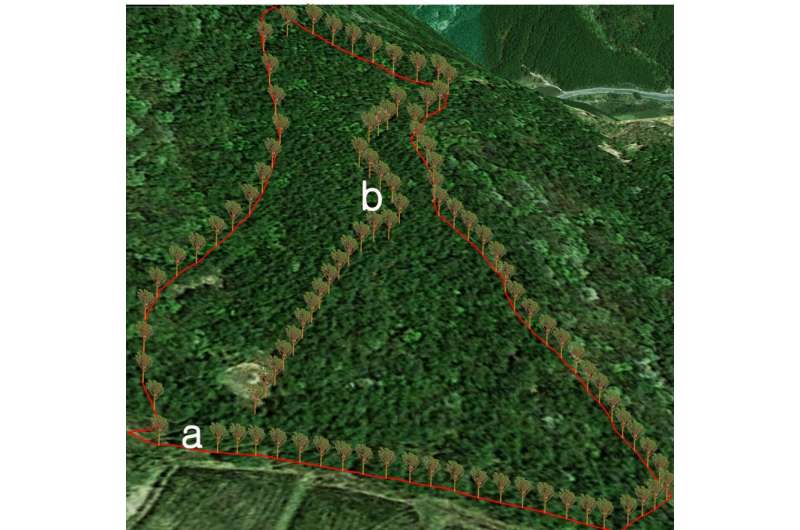
A large-scale simulation study by Dan-Bi Um, published in Scientific Reports, modeled solar tree installation across a coastal forest in Goseong County, South Korea, compared with an existing flat-panel 1 MW solar farm. The flat-panel site resulted in the loss of approximately 98% of forest cover. By contrast, the solar-tree simulation preserved 99% of the forest, while still delivering the same power output. Remarkably, just 63 solar trees matched the capacity of the larger flat-panel array, all within a substantially smaller physical footprint.
This approach offers a promising path to align renewable energy expansion with environmental conservation. By preserving nearly intact forests, solar trees help maintain biodiversity, protect soil and water systems, and uphold carbon sequestration functions—critical ecological services often sacrificed by traditional solar farms.
While further research is needed to validate performance across diverse geographic and ecological conditions, this study marks a pivotal step in designing energy infrastructure that preserves green spaces while advancing sustainability goals.
