

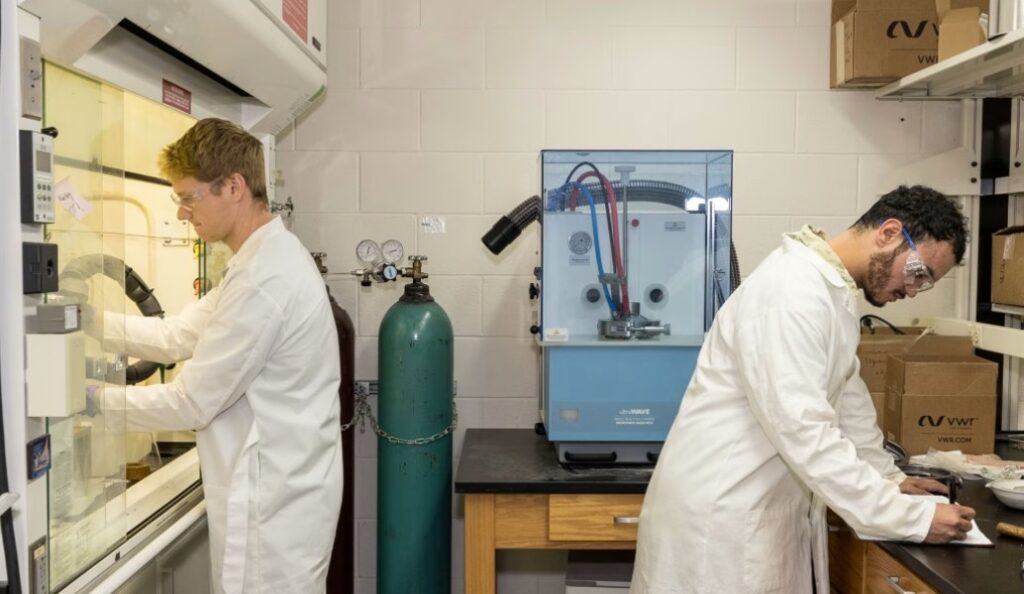
University of Wisconsin–Madison chemical engineers are championing solvent-based (dissolution) recycling—a promising alternative to conventional mechanical recycling—to recover high-quality polymers from complex or layered plastic waste. This technique chemically dissolves plastic polymers and separates them for reuse, enabling them to be “reborn” into near-virgin materials rather than downcycled to lower-value products, which is typical in traditional methods, reports their College of Engineering website.
Mechanical recycling—a conventional process—relies on shredding and reprocessing but often disrupts the long polymer chains that give plastics their strength, resulting in degraded material quality. Furthermore, it’s ill-suited for multilayer plastics, films, or mixed material streams, which make up a large portion of plastic waste.
In contrast, solvent-based methods, specifically the Solvent-Targeted Recovery and Precipitation (STRAP) process, excel in dissolving plastics while deep cleaning them of additives, colors, and non-organic contaminants. They can effectively separate different polymer types within multilayer packaging—such as film wrappers, electronics casings, or mixed bales—without damaging polymer integrity. This results in pure resins suitable for recycling into high-value items, such as water bottles made from recovered material.
The UW–Madison team, led by Professor George Huber and his students, has advanced STRAP since 2019. Supported by computational tools such as the COSMO-RS model, they’ve identified selective solvents and validated the dissolution and precipitation workflow experimentally—and demonstrated its efficacy with multilayer film prototypes.
Their July 2025 paper in the journal Nature: Chemical Engineering evaluates the global landscape for solvent-based recycling, emphasizing both its environmental and economic potential, and urging broader industrial adoption.
