

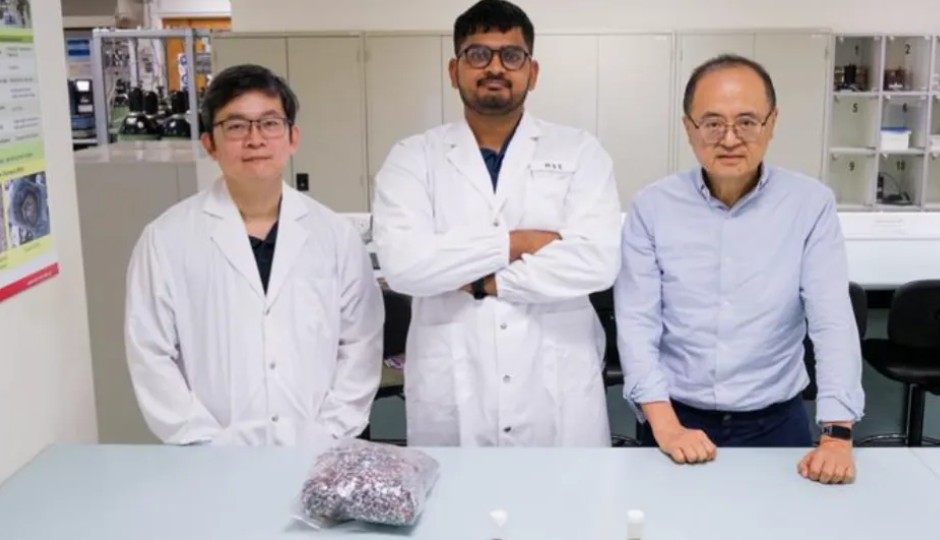
Researchers at Nanyang Technological University (NTU) Singapore have developed a new recycling technique that could address one of the most persistent problems in plastic waste management: the recycling of mixed plastic packaging. Commonly used for products such as snack foods and instant noodles, multilayer packaging combines different plastics to provide strength and airtight protection. However, these tightly bonded materials are notoriously difficult to recycle and often end up in landfills or incinerators, tells The Engineer.
The NTU team has introduced a process called depolymerization-induced polymer separation (DIPS), which selectively breaks down one type of plastic while leaving others intact. Unlike many chemical recycling methods, the process does not rely on harmful solvents, making it potentially safer, cleaner, and more economical.
At the core of the technology is reactive extrusion, a continuous industrial process already widely used in plastics manufacturing. During treatment, poly(ethylene terephthalate) (PET), commonly found in beverage bottles and packaging films, reacts with glycerol and is chemically broken down into smaller molecules. This transformation changes the material’s properties, causing it to separate naturally from polypropylene (PP), another widely used packaging plastic. The separation occurs because of differences in polarity and viscosity between the materials, eliminating the need for additional solvents or complex sorting procedures.
Laboratory tests showed promising results. The recovered polypropylene retained up to 90% of the tensile strength of virgin material, making it suitable for practical reuse. The PET-derived material cannot be directly reused as packaging, but it could serve as a feedstock for higher-value products, including specialty materials and chemical building blocks.
The researchers believe the DIPS process can be adapted for other mixed-plastic combinations and scaled using existing industrial equipment. They are now seeking industry partnerships to validate the technology at larger scales. If successful, the method could help unlock significant economic value from plastic waste while supporting circular economy goals and reducing the environmental burden of packaging materials.
