

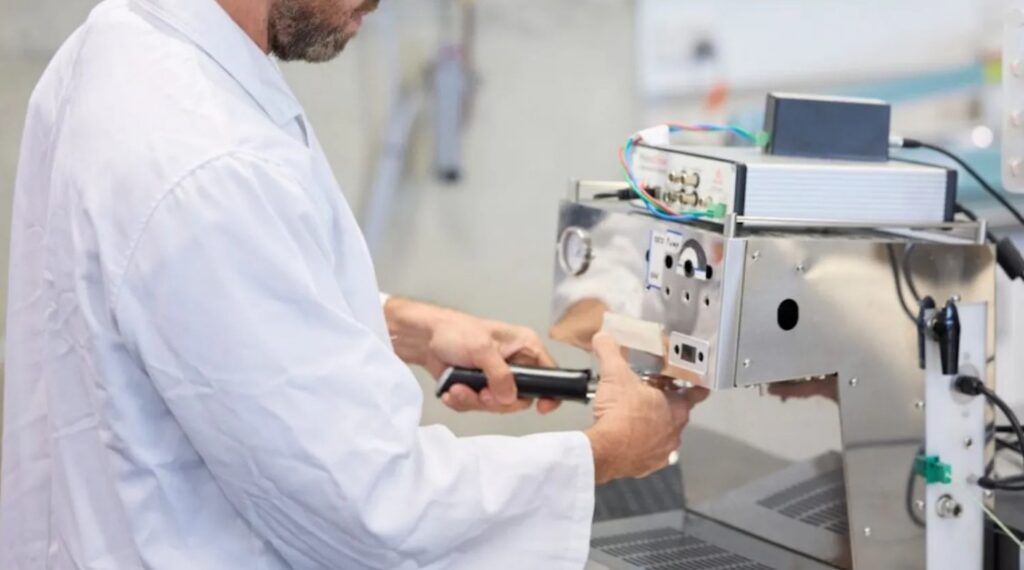
Scientists have discovered an unusual way to improve espresso brewing: sound waves. According to a report in Popular Science, researchers have demonstrated that acoustic vibrations can enhance the extraction process, potentially producing more consistent espresso while reducing the amount of coffee required for each shot.
Espresso preparation is a complex process involving the interaction of water pressure, temperature, grind size, and coffee particle distribution. One persistent challenge is channeling, a phenomenon in which pressurized water finds paths of least resistance through the coffee puck. When channeling occurs, some grounds become over-extracted while others remain under-extracted, leading to inconsistent flavor and inefficient use of coffee.
To address this problem, researchers explored the use of acoustic waves during brewing. By applying controlled sound vibrations, they were able to influence the movement of water through the coffee bed and improve the distribution of dissolved compounds. The vibrations helped create a more uniform extraction process, allowing water to interact more evenly with the coffee grounds.
The findings suggest that sound-assisted brewing can increase extraction yields without requiring additional coffee. This is particularly significant because coffee prices have been rising due to climate-related challenges, supply chain pressures, and growing global demand. Improving extraction efficiency could enable cafés and consumers to achieve the same flavor intensity using fewer beans, reducing costs and minimizing waste.
Beyond coffee preparation, the research highlights broader engineering principles involving fluid dynamics and particle interactions. The study demonstrates how acoustic energy can be used to manipulate the behavior of liquids moving through porous materials, an approach that may have applications in other industrial and scientific processes.
The work also illustrates how seemingly everyday activities can serve as platforms for scientific innovation. Espresso brewing has increasingly become a subject of research because it combines chemistry, physics, and materials science in a highly controlled environment. By introducing sound waves into the process, researchers have identified a novel technique that could influence future coffee equipment designs.
While additional research is needed before sound-assisted espresso machines become commercially available, the study offers a promising example of how unconventional engineering solutions can improve efficiency, consistency, and sustainability in food and beverage production.
