

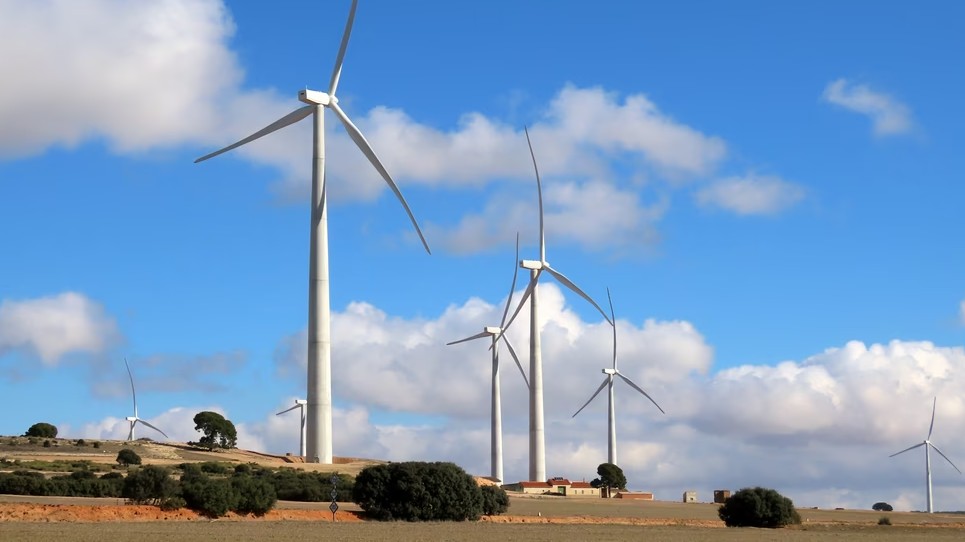
In the Spanish town of Higueruela, a landscape once defined by agriculture has been transformed by wind turbines that now dominate the surrounding plains. The community’s embrace of wind power has turned it into a symbol of Spain’s rapid renewable-energy expansion and illustrates both the economic opportunities and tensions that accompany the transition to clean energy, tells The Atlantic.
Over the past two decades, wind development has brought substantial financial benefits to Higueruela. The town leases land to wind-energy companies and receives tax revenue from the turbines, generating income that has funded public improvements such as new infrastructure, municipal services, and community projects. For a rural town with limited economic prospects, wind power has become a reliable source of revenue and stability. Residents who own land hosting turbines also earn direct payments, providing an additional stream of income in a region where agriculture alone often yields modest returns.
The experience reflects a broader national trend. Spain has dramatically expanded renewable energy in recent years, doubling its wind and solar capacity while reducing dependence on fossil fuels such as natural gas. Today, more than half of the country’s energy comes from renewable sources, positioning Spain as a leading example of large-scale clean-energy adoption in Europe. Lower energy costs associated with renewable generation have also contributed to economic growth.
Yet the rapid build-out of wind farms has also generated debate. While some rural communities welcome the economic benefits, others worry about visual impacts on the landscape, environmental concerns, and the concentration of projects in sparsely populated areas. Questions about land use, community consent, and long-term environmental effects have become increasingly prominent as renewable infrastructure spreads across the countryside.
The story of Higueruela illustrates the complex reality of the energy transition. Wind power can deliver economic revitalization and cleaner electricity, but it also requires communities to navigate difficult choices about land, identity, and development. As nations accelerate efforts to reach climate-neutral energy systems, the experiences of towns like Higueruela highlight the importance of balancing environmental goals with local interests and social acceptance.
