

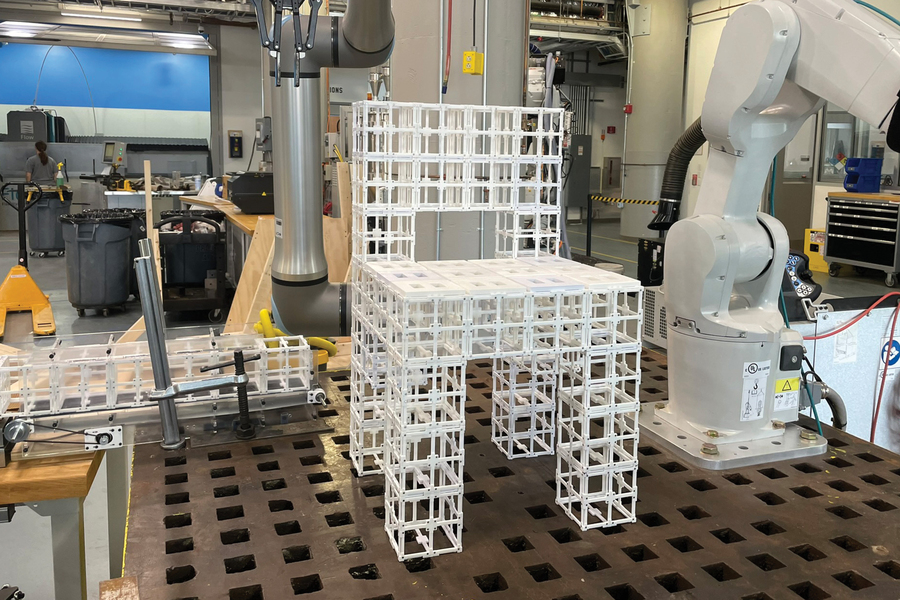
MIT researchers have developed an AI-driven robotic system that can design and assemble physical objects, such as a chair or shelf, based solely on simple verbal or text prompts, a big step toward accessible, on-demand fabrication. Traditional computer-aided design tools are powerful but complex, requiring years of training. The new system replaces that barrier by using generative AI to interpret user descriptions, turning natural language into 3D geometry and actionable robotic instructions. Users can even refine designs with feedback mid-process, making design interactive and intuitive, tells MIT News.
The process starts when a user provides a prompt such as “Make me a chair.” A generative AI model builds a 3D representation of the object’s shape based on that prompt. A second AI model, trained to understand both function and form, breaks this 3D shape into buildable modules, such as structural and panel components, that fit together logically. This step is essential because it translates a free-form AI mesh into a configuration that a robot can physically assemble.
Once the design is complete, a manufacturing robot takes over, assembling the object from prefabricated parts. In demonstrations, the team produced chairs, shelves, lamps, and other items from modular lattice components. These parts are reusable and reconfigurable, which helps reduce material waste in the fabrication process. In a user study, more than 90% of participants preferred objects made with this AI-robotic approach over competing generative design methods.
While still an early demonstration, the system points toward rapid prototyping and localized manufacturing, where users can create custom objects at home or on site without formal design training. Researchers believe future versions could support even more complex objects and incorporate a wider variety of parts, potentially transforming design from a specialist skill into a conversational exchange with AI and robots.
