

This week, we read that 300 current and former NASA employees, including at least four astronauts, have signed an open letter deploring budget cuts that are sure to lead to neglect and loss of life. Dubbed The Voyager Declaration, the letter addressed to U.S. transportation secretary Sean Duffy evokes memories of the Challenger and Columbia disasters, which killed all aboard, a total of 14 astronauts.
One might consider the subject moot since NASA has now outsourced its rocket missions. However, we must point out that the companies NASA outsources, SpaceX for example, tend to have a much higher risk tolerance than NASA.
“Failure is an option here. If things are not failing, you are not innovating enough,” said Elon Musk, owner of SpaceX.
SpaceX has experienced multiple failures during prototype testing, especially with Starship. To be fair, the company has not had a single fatality in its Commercial Crew program, which takes astronauts to and from the Space Station.
Too Exciting
Rocket launches continue to provide too much excitement. But one space startup rises to take all the excitement out of it.
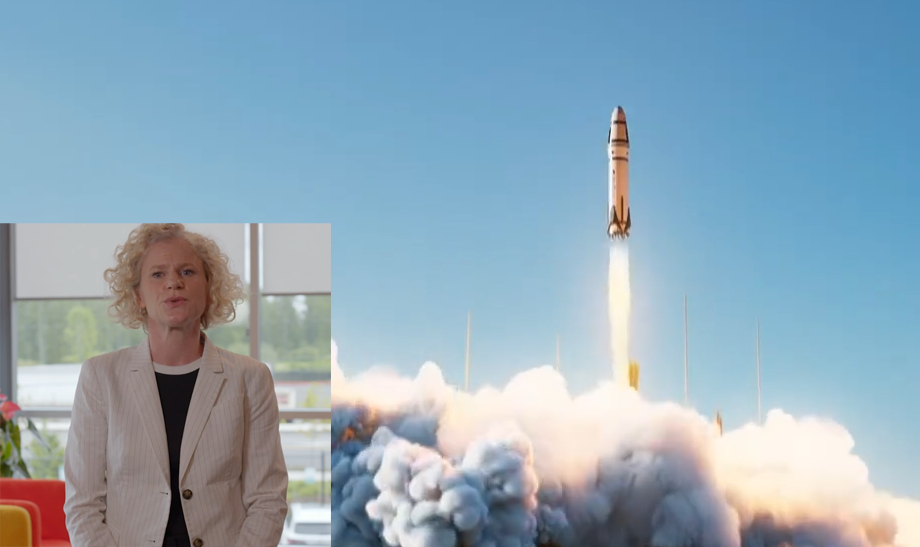
In a sprawling 170,000-square-foot industrial facility near SeaTac, Seattle’s main airport, Kelly Hennig, COO of Stoke Space Technologies, a private aerospace company, stands before a camera to record a presentation for Ansys’ Simulation World, a virtual event. She envisions rocket launches of the future not as nailbiters, harrowing from pre-ignition to beyond human vision. She would like her company, Stoke Space Technologies, not be in the news at all — unless it be for getting contracts from space agencies, of course.
“We are developing fully reusable launch vehicles or rockets, and we’re looking to make launch boring,” said Hennig of Stoke, one of new wave of startups challenging the traditional economics and engineering of spaceflight.
To make space launches boring, Hennig argues, launches must become common everyday events, not the kind that are risky and super-expensive. That means being relatively cheap, reliable, and frequent—qualities more often associated with commercial aircraft and trucking companies than with NASA, SpaceX, Boeing or any other space agency, public or private.
Stoke Space Technologies — founded in 2020 by CEO Andy Lapsa and CTO Tom Feldman — is on a mission to develop a fully and rapidly reusable medium-lift rocket called Nova. The company has raised approximately $480 million to date.
Stokes’ approach is precisely what you’d want in a safety-conscious rocket company: slow and steady, lots of testing and very important to this story, lots of simulation, though Hennig does not mention Ansys specifically. They haven’t got a rocket into space yet, nor are they in a mad rush to do so. Leave that to space cowboys, if I am reading Hennig’s thoughts correctly.
“Humanity needs routine and boring access to space,” she said. “We need to be able to drop things off into orbit in the same way that UPS or FedEx drops off your packages.”
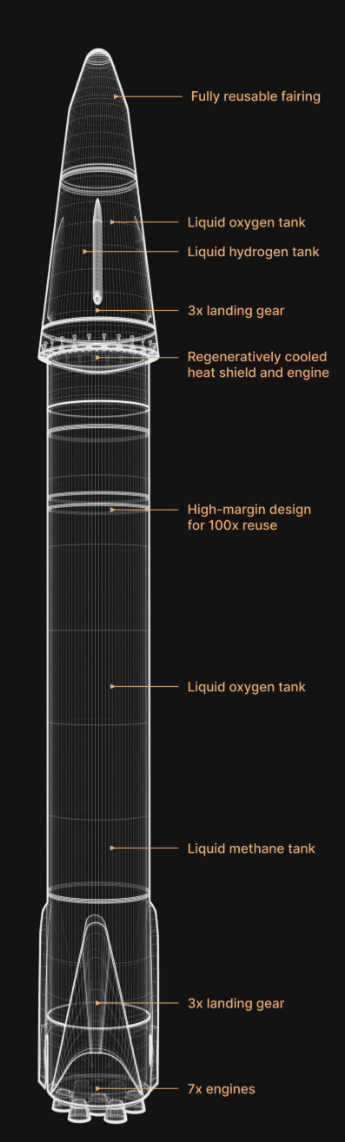
The key to unlocking this vision lies in reusability—not just of the first stage, as pioneered by SpaceX, but of the entire launch system. Stoke’s flagship vehicle, dubbed Nova, is a fully reusable medium-lift rocket designed from the ground up to fly, land, refuel, and fly again. While other companies are still refining partial reusability, Stoke is betting that a clean-sheet approach to full-cycle reuse is what it will take to make access to orbit truly routine and relatively inexpensive.
A Heat Shield Like No Other
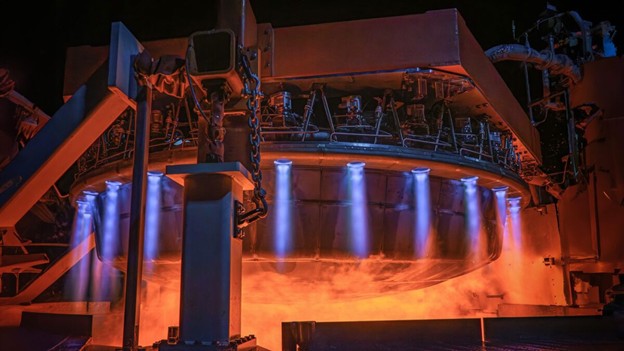
At the heart of Nova is an innovative thermal protection system (TPS) constructed using advanced additive manufacturing techniques. The shield is 3D printed with microscopic capillaries throughout its structure, allowing cryogenic hydrogen—the same fuel used by the rocket—to circulate and cool the second stage during reentry.
“This system actually fails passively,” Hennig explained. “If you were to get a hole in this system, it would overcool in that particular area and continue to provide the protection needed for reentry.”
The system eliminates the need for traditional ceramic tile-based protection, a notorious point of failure with previous reentry vehicles like the Space Shuttle. Instead, the second stage, powered by a novel engine called Andromeda, is designed to return intact, ready for reuse without costly inspection or repair.
Launch. Recover. Repeat
The first stage is named Zenith, a full-flow staged combustion engine that Hennig calls the most efficient and reliable propulsion cycle available. Unlike other startups that try to squeeze maximum performance from exotic designs, Stoke opts for a more conservative and rugged approach.
“We chose this engine specifically because it allows us to get very high performance as we’re backed away from the absolute maximum performance conditions,” she said. “This allows us to continue to reuse it and maximize the reliability of the engine itself.”
It’s a principle that mirrors how airlines operate—balancing performance with durability for high turnaround frequency. Stoke’s vision is to treat rocket launches more like airplane departures, minimizing the need for special handling between flights.
Testing Close to Home
That operational model has enabled Stoke to develop its in-house manufacturing capabilities. In Kent, engineers build, assemble, and test everything from engine components to flight hardware. Two and a half hours east of Kent is its 75-acre Moses Lake test facility.
Having the test facility so close to manufacturing “has been one of the main reasons we’ve been able to iterate and move so quickly,” Hennig said.
While the engineering is impressive, the strategic implications of Stoke’s fully reusable architecture may be even more consequential. With a reusable second stage, the company not only makes two-way transportation more affordable, it also reduces danger by leaving less “litter” and less debris raining down on our heads.
A two-way rocket can also bring things down from space, other than itself and its crew, explains Hennig.
This capability could transform emerging industries like in-orbit manufacturing, where delicate materials—from pharmaceuticals to semiconductors—can be processed in microgravity and returned to Earth. Hennig mentioned examples like artificial retinas, fiber optics and even advanced drug formulations that benefit from the unique conditions in space.
Heading Into Orbit
Stoke successfully tested its 2nd stage in 2023 via a vertical takeoff and landing (VTVL) hop test known as Hopper2. The test validated flight dynamics, landing procedures, thermal shielding, and propulsion—all critical steps toward a fully reusable upper stage.
Next up is orbital launch, scheduled to begin next year from Launch Complex 14 at Cape Canaveral, Florida—a site steeped in history. “It is the historic John Glenn pad,” Hennig noted, referencing the launch site for America’s first orbital astronaut.
If Stoke succeeds, the company could leapfrog early leaders in the private space industry with the sheer volume of launches, given that it does not have to produce a whole rocket with each launch. This now-repeated process limits the frequency of launches.
“Production is no longer a driving constraint in launch.”
Give Millionaires a Shot
Stokes concedes it has competition. Other space/rocket companies have figured out that reusability lowers cost and increases frequency. SpaceX, Blue Origin, Rocket Lab, and even legacy aerospace firms are moving toward reusable platforms. But Stokes had reusability as a primary objective since day one, and its rocket’s components are designed, assembled, and used with reusability in mind.
The implications could be profound. By amortizing launch vehicle costs across dozens—or even hundreds—of missions, Stoke could reduce launch prices to the point where space becomes not just accessible but dependable.
“We’re driving down the cost of access to space,” said Hennig.
Stoke Space is not developing a crewed vehicle, nor does Hennig suggest space tourism is a good idea, but we can dream: one day, going out in space may not just be limited to billionaires.
