

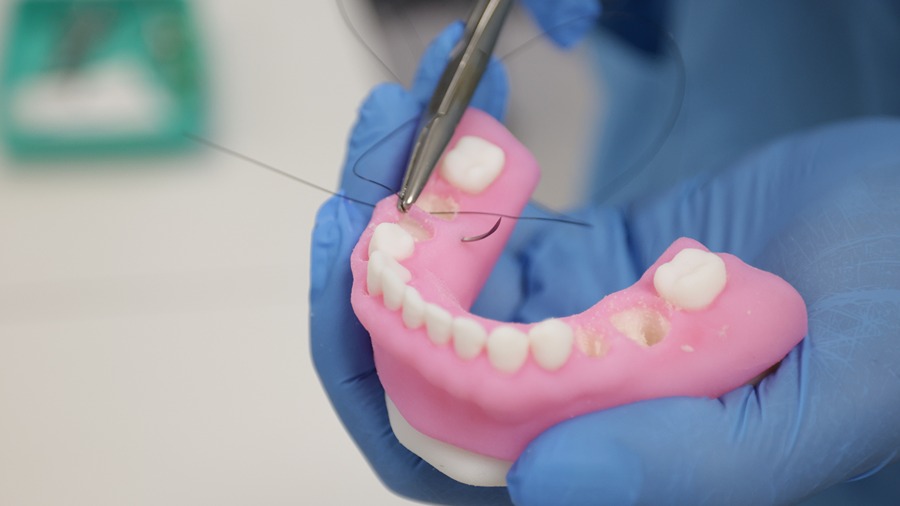
MINNETONKA, MN and REHOVOT, Israel, Feb 20, 2026 – Stratasys has launched a dental anatomical model preset for simulation-based training, expanding its 3D printing portfolio for medical education. The 3D-printed models support hands-on training for dental schools, training centers, and medical device manufacturers. The preset reduces operational complexity while addressing ethical and biohazard concerns tied to traditional methods.
Dental education is shifting to digital workflows and simulation-based learning, reducing reliance on stone models, cadavers, and animal specimens. Stratasys’ dental anatomical model preset provides 3D-printed models for hands-on training in dental programs.
Stratasys presets control how multiple materials are blended within each 3D-printed model, defining ratios and distribution patterns to maintain repeatable output. The method supports customizable anatomical and musculoskeletal systems that biomechanically reflect human anatomy. These models serve dental education and medical training across classrooms, clinics, conferences, and product demonstrations.
Stratasys models are fully synthetic, eliminating biohazard risk, ethical approvals, storage constraints, and disposal requirements associated with cadavers and animal specimens.
The model supports multiple stakeholders across the dental ecosystem:
- Medical device and dental OEMs can accelerate clinician adoption through hands-on demonstrations and shorten development cycles by testing tools and techniques on physically accurate replicas.
- Training centers can replace animal and cadaver labs with scenarios that reduce operational costs and logistical complexity.
- Dental schools can better prepare students for real procedures, reducing the learning curve before entering patient care.
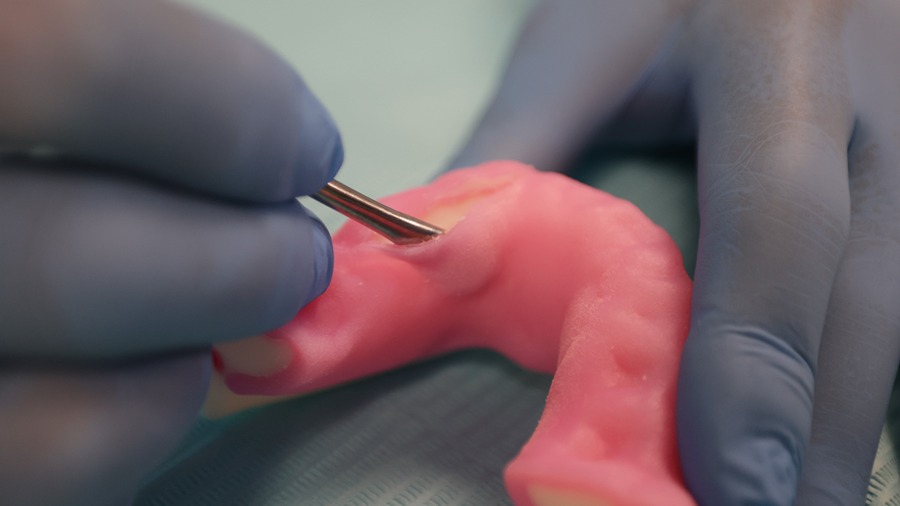
“With this preset for dental anatomical models, we are entering a new segment of digital dental education and clinical simulation, helping customers move beyond traditional training methods toward more standardized, technology-driven learning environments,” said Erez Ben Zvi, VP medical at Stratasys. “By combining anatomical realism with repeatability and customization, we’re enabling educators, clinicians, and device manufacturers to prepare for real-world procedures with greater confidence and consistency.”
Stratasys applies multi-material 3D printing to reproduce the biomechanical behavior of bone, teeth, nerves, and soft tissue in its dental anatomical model preset. The 3D-printed models deliver feedback during drilling, cutting, suturing, and implant placement. Unlike plastic models with limited anatomical detail and biological specimens that vary and require controlled handling, the preset produces consistent anatomy suitable for medical training.
CBCT scan data enables customization of 3D-printed models to reflect patient-specific pathologies and cases such as atrophic jaws, sinus lifts, and bone grafting. The models support extractions, implant placement, periodontal and endodontic surgery, and sinus augmentation, strengthening surgical planning and training.
Stratasys also offers presets for bone, cartilage, muscle, ligament, and soft tissue, extending simulation-based training across multiple medical and educational applications.
Source: Stratasys
About Stratasys

Stratasys Ltd., founded in 1989 by S. Scott Crump, develops additive manufacturing and 3D printing solutions using polymer-based materials. The company is headquartered in Eden Prairie, MN, and Rehovot, Israel. Its offerings include 3D printers, consumable materials, and software tools used in aerospace, automotive, healthcare, and consumer goods industries. Stratasys technology supports the production from materials such as ABS, polyphenylsulfone (PPSF), and polycarbonate. The company served approx. 25,000 customers worldwide.
