

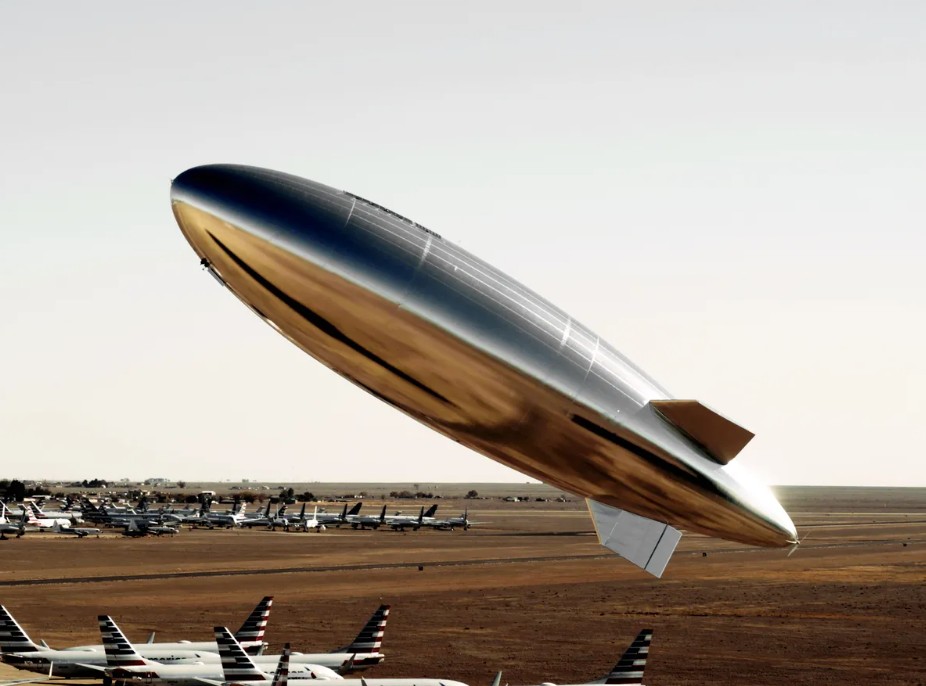
A new class of aerial technology is positioning itself between satellites and ground infrastructure. The IEEE Spectrum article explores Sceye’s high-altitude platform station, or HAPS, a solar-powered airship designed to operate in the stratosphere and deliver continuous connectivity and sensing capabilities.
Unlike traditional satellites, which orbit Earth, Sceye’s platform hovers at a fixed location roughly 60,000 feet above the surface. At this altitude, it can function as a “pseudo-satellite,” offering communication and observation services while maintaining persistent coverage over a specific region. This stationary capability allows it to act as an aerial cell tower, potentially extending broadband access to underserved or remote areas.
The system relies on solar energy to remain airborne for extended periods, potentially months at a time. Large solar arrays power onboard electronics and propulsion, enabling long-duration missions without the need for frequent refuelling or maintenance. This endurance is a defining advantage over conventional aircraft, which are limited by fuel constraints.
Beyond connectivity, the platform supports a wide range of sensing applications. Equipped with advanced instruments, it can monitor environmental conditions, track wildfires, and observe atmospheric changes. Its position above weather systems but below satellites allows it to capture high-resolution, real-time data continuously, filling a gap between ground-based sensors and space-based observation.
The article also highlights the broader appeal of HAPS technology. Compared with satellites, these platforms are less expensive to deploy and can be repositioned or upgraded more easily. At the same time, they offer wider coverage than terrestrial networks, making them a flexible option for telecommunications, disaster response, and scientific research.
Challenges remain, including maintaining stability in the stratosphere and ensuring reliable long-term operation. However, ongoing testing suggests that these systems are approaching practical viability.
Sceye’s work reflects a growing interest in hybrid infrastructure that combines the reach of space systems with the adaptability of aircraft. By occupying the space between Earth and orbit, high-altitude platform stations could redefine how connectivity and environmental monitoring are delivered on a global scale.
