
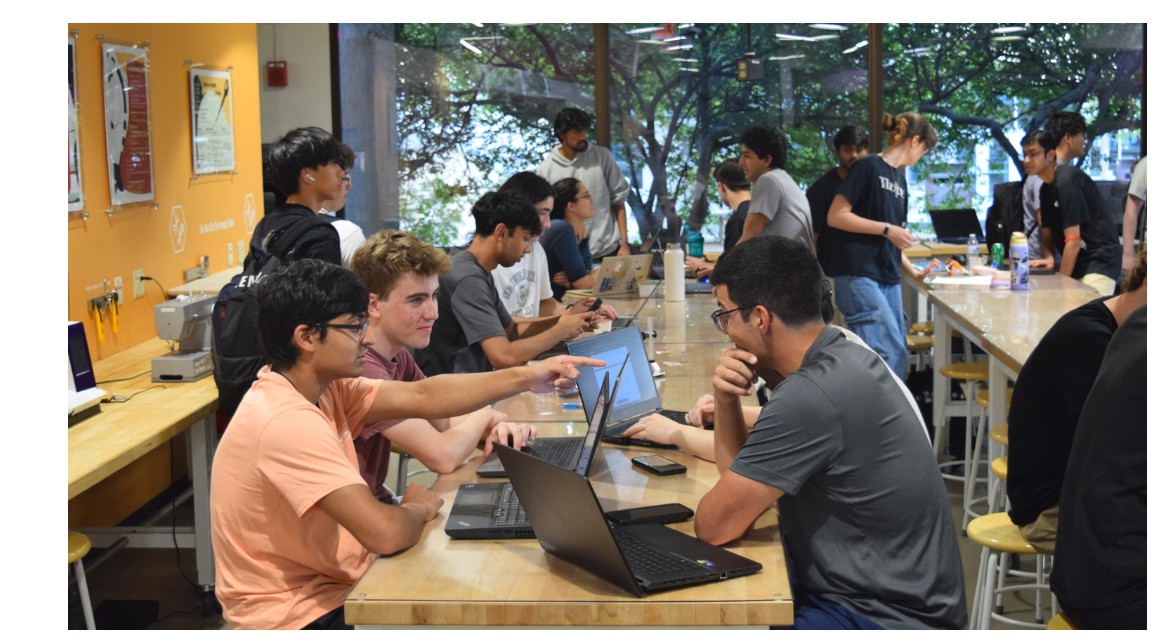
The University of Wisconsin-Madison’s recent Hackathon/Makerthon, held September 26–27, brought more than 70 students from nine majors together in the Design Innovation Lab @ Wendt Commons. Organized by the Department of Industrial and Systems Engineering and the Grainger Engineering Design Innovation Lab, the event aimed to spur innovation through teamwork and exposure to industry demands, tells College of Engineering at UW-Madison.
Participants had three challenge tracks, each provided by industry partners Accuray and Plexus: designing a patient-positioning device used in radiation therapy, devising a tool to streamline product specifications workflows, or building an automated optical inspection system for detecting defects in manufacturing. Teams selected one challenge, brainstormed, prototyped, tested, and refined, often working through the night to complete their designs.
One standout team, led by Nicolas Greaves, developed a scissor-lift mechanism for the patient-positioning device; they slept just about an hour during the entire event. Another team combining mechanical, biomedical, and electrical engineering talent won the inspection challenge by building a scanning and image-recognition system.
Mentors included Assistant Professor Michael Biehler, graduate students, and industry engineers who offered guidance, feedback, and remote consultations during the 24-hour push. Beyond prizes and prototypes, organizers stressed the importance of giving students visibility into real industry problems and building a pipeline of interaction between companies and future engineers.
While the Design Innovation Lab has hosted hackathons and makerthons sporadically, Biehler hopes to institutionalize this event annually, expand industry participation, and integrate additional workshops like pitch preparation. The goal is not just to challenge students, but to embed a sustainable bridge between engineering education and industry needs.
