

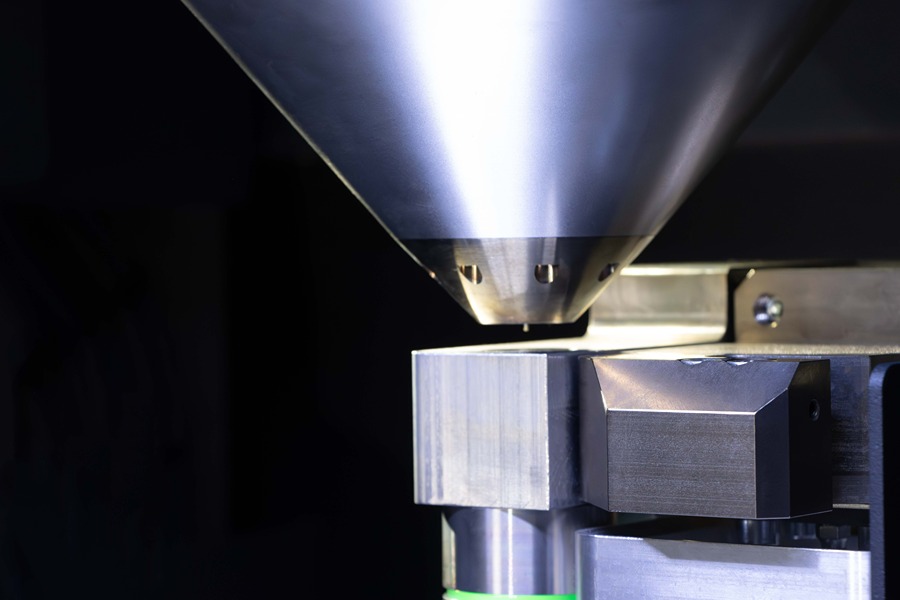
BARCELONA AND LINARES, Spain, Apr 28, 2026 – Mining and heavy machinery operators depend on steel parts that must survive wear, impact, and long service cycles. The SUMMSEED project is developing a lower-emission medium-manganese steel for casting and wire-based additive manufacturing repair, with cone crusher components serving as the industrial demonstrator.
The SUMMSEED project brings together academic, technology, and industrial partners from the steel and additive manufacturing sectors. Its goal is to validate a medium-Mn steel (MMns) for heavy-industry applications while reducing the environmental footprint of production and repair.
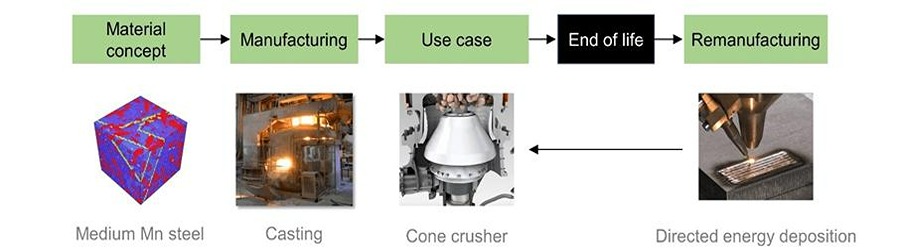
The project will move from alloy design and laboratory testing to pilot plant casting trials and crusher component repair. This approach will test the material under industrially relevant conditions rather than limiting development to laboratory samples.
The steel is designed to reduce the use of critical alloying elements. It is expected to combine strength, toughness, and wear resistance for mining and heavy machinery applications. The reduced manganese content also supports European efforts to lower dependence on critical raw materials.
SUMMSEED will adapt the alloy for both conventional casting and additive remanufacturing. The process links new part production with the repair of worn or damaged components, reducing replacement demand and extending component service life.
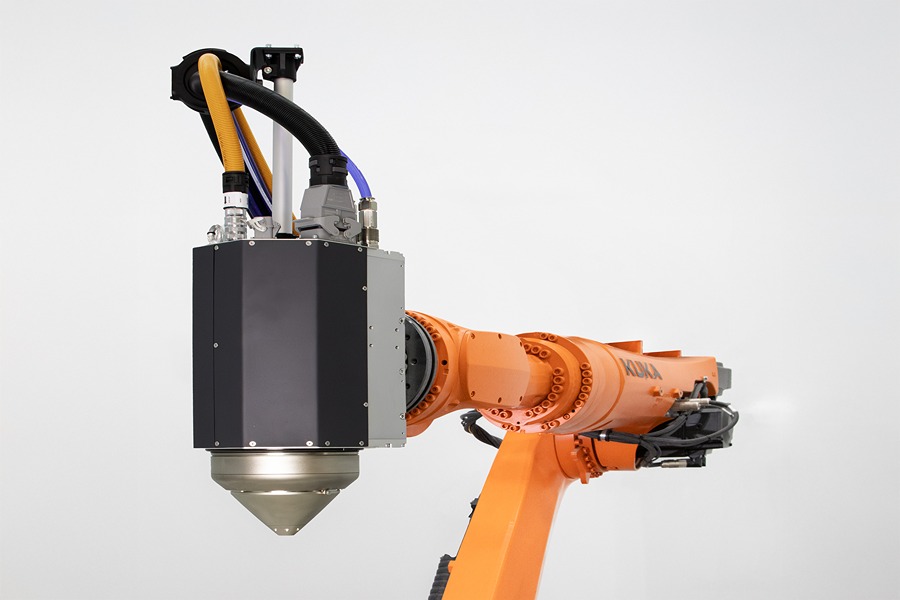
For repair work, the project will use laser wire-directed energy deposition (LW-DED). The process uses welding wire as feedstock and deposits material layer by layer to rebuild worn steel parts.
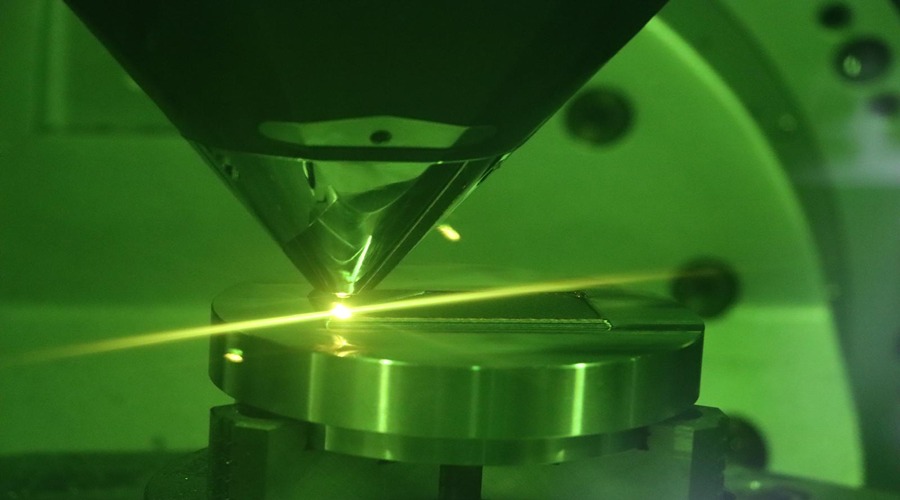
The project applies LW-DED to real cone crusher components. These parts operate under high wear and impact loads, making them suitable for testing steel performance, repair quality, and service-life extension in mining environments.
Pere Barriobero Vila, coordinator of the SUMMSEED project said: “It is expected that this novel material will render an improved service performance than the currently used Hadfield steels enabling a more sustainable production by reducing alloying elements and the reuse of end-of-life parts. By tailoring alloys for both casting and directed energy deposition (DED) remanufacturing, the project aims to replace traditional Hadfield steels with leaner, more cost-efficient grades that offer high strength, toughness and wear resistance while reducing CO₂ emissions and the use of critical raw material. From casting to DED repair, the project enables a complete circular process that extends component lifespan and minimizes material waste and environmental impact.”
The Technical University of Catalonia – BarcelonaTech (UPC) coordinates the project. UPC contributes alloy design, advanced characterization, and metallurgy expertise to connect material development with industrial requirements.
Other partners support the project across manufacturing, simulation, validation, and repair:
- CIM UPC provides digital and additive manufacturing expertise.
- SIDENOR is responsible for industrial steel manufacturing and quality validation.
- The Technical University of Freiberg (TUBAF) contributes modeling, metal forming, and wire feedstock production for additive manufacturing.
- Delft University of Technology (TU Delft) provides simulation and material kinetics expertise for steel development.
- Sandvik will develop the product demonstrators and support testing at higher technology readiness levels.
- Meltio contributes laser-based DED equipment, process development, and remanufacturing expertise.
The project covers the full manufacturing route, including:
- Alloy design and laboratory testing
- Raw material production
- Industrial casting trials
- Wire production for additive manufacturing
- Laser wire-directed energy deposition repair
- Component quality validation
- Laboratory and synchrotron characterization
- Pilot plant testing
- Cone crusher component repair and performance evaluation
SUMMSEED will provide processing guidelines, quality criteria, and pilot plant results for steelmakers, technology providers, and industrial end users. The project will also generate use-case data on wear, impact resistance, and lifetime extension in mining conditions.
The consortium plans workshops and direct engagement with companies to support industrial adoption. Its findings may also inform policymakers and standardization bodies developing frameworks for circular and low-carbon steel production.
Source: Meltio
About Meltio

Meltio, founded in 2019 and headquartered in Linares, Spain, specializes in metal additive manufacturing solutions using its proprietary wire-laser Directed Energy Deposition (DED) technology. The company offers a range of products, including the Meltio M450 and M600 3D printers, as well as integration kits for CNC machines and robotic systems, enabling hybrid manufacturing capabilities. Meltio serves various industries such as aerospace, defense, automotive, energy, and education, providing tools for both production and research applications. As of early 2025, Meltio has sold over 500 systems worldwide, with installations in more than 60 countries, and employs approximately 120 people. Meltio’s technology has been adopted by several defense organizations, including the U.S. Navy, the French Navy, and the South Korean Army, for on-site manufacturing and repair of metal components.
About SUMMSEED Project

SUMMSEED is a European research project developing medium-manganese steel for heavy industry. The project focuses on casting and wire-based additive repair using directed energy deposition. It aims to reduce manganese use, critical alloying elements, and production-related emissions. Its target users include steelmakers, mining operators, heavy machinery companies, and technology providers. SUMMSEED tests cone crusher components to assess wear, impact resistance, and service life. The project covers alloy design, feedstock production, casting, repair, quality validation, and testing. It also compares new steel grades with Hadfield steels used in heavy-duty applications. The website lists Barcelona, Spain, as the coordinator location through UPC. SUMMSEED receives funding from the European Union’s Research Fund for Coal and Steel. Partners include UPC, CIM UPC, SIDENOR, TUBAF, TU Delft, Sandvik, and Meltio.
