

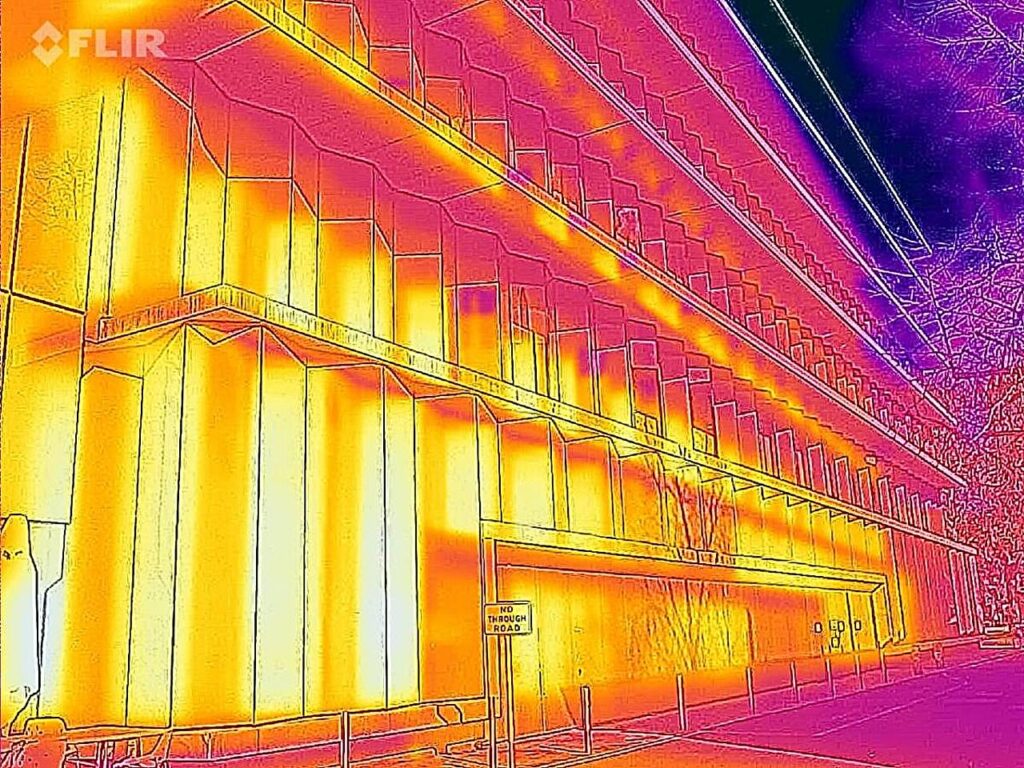
Researchers at the University of Adelaide have found that the glass surfaces on modern buildings don’t just shape indoor energy use; they also influence outdoor temperatures around those structures, tells Tech Xplore. The study examined how the emissivity, a material’s ability to emit thermal radiation, of glazed facades impacts the mean radiant temperature (MRT) and longwave infrared radiation in urban outdoor spaces. These factors matter because they determine how warm people feel when they’re outside near buildings.
The team collected data from glazed facades on several campus buildings, focusing on the Braggs building in a setting that mimics typical urban “street canyons.” They then ran simulations for extreme hot and cold days, testing different combinations of glass emissivity and orientation to see how the surfaces influenced MRT and infrared radiation.
Results showed that high-emissivity glass increases outdoor MRT and infrared radiation, especially in summer, making the area feel warmer to pedestrians. Reducing the glass’s emissivity with energy-efficient coatings lowered MRT by up to about 5°C on hot afternoons, which could noticeably improve outdoor thermal comfort. Winter effects were smaller and somewhat mixed but suggested that low-emissivity glass still helps maintain better conditions for people outside.
Facade orientation also played a role: glass facing west during the hottest part of the day had a larger temperature impact than glass facing northeast, for example. That means design decisions about which way glazed surfaces face can help moderate outdoor heat exposure.
The findings suggest architects and city planners should consider not only a building’s energy performance but also how glazed facades contribute to the urban microclimate. Lower-emissivity glass and thoughtful orientation could reduce heat stress in pedestrian areas, especially in hot climates, without compromising the benefits of natural light and views.
