

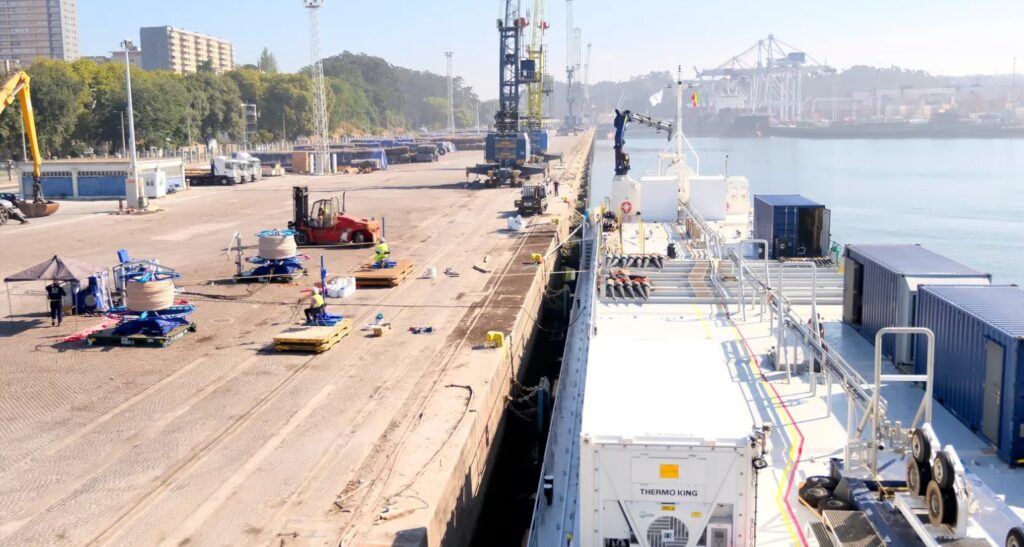
TAT-8, the first transoceanic fiber-optic communications cable, is being recovered from the Atlantic seabed and prepared for recycling, marking the end of an era for an engineering milestone that helped shape global connectivity. Laid in 1988 by AT&T, British Telecom, and France Télécom, TAT-8 spanned nearly 6,000 kilometers between the United States, the United Kingdom, and France and introduced optical fiber as a way to transmit telephone and data traffic across oceans. Its optic technology carried tens of thousands of circuits and revolutionized international communications, laying the groundwork for the world wide web and modern digital traffic. Although retired in 2002 after becoming full and then outdated, the cable sat on the seabed until Subsea Environmental Services began pulling it up in 2025 aboard the MV Maasvliet. By mid-2025 more than a thousand kilometers had already been recovered and brought to port in Portugal for shipment to a recycling facility in South Africa, tells Wired.com.
The article dispels the long-standing myth that sharks regularly chew through undersea cables; while they might brush against suspended cables, most damage comes from environmental forces or fishing activity. Instead, the article focuses on the human effort behind both installing and now retrieving these critical pieces of infrastructure. Teams of offshore workers are manually handling heavy repeater housings and coiling fiber cable in ship holds, a labor-intensive process that underscores the skill and experience required to maintain and decommission undersea networks.
Recovered TAT-8 components hold valuable materials such as copper and steel, which will be separated and reused, reflecting broader concerns about resource scarcity as demand for metals grows. As the cable’s legacy is drawn up from the deep, the narrative highlights the unseen backbone of global internet traffic—thousands of miles of subsea fiber linking continents that most people never consider until it fails. The recovery work also draws attention to an aging industry workforce and the importance of preserving institutional knowledge as these technologies evolve and newer cables replace the pioneers.
