

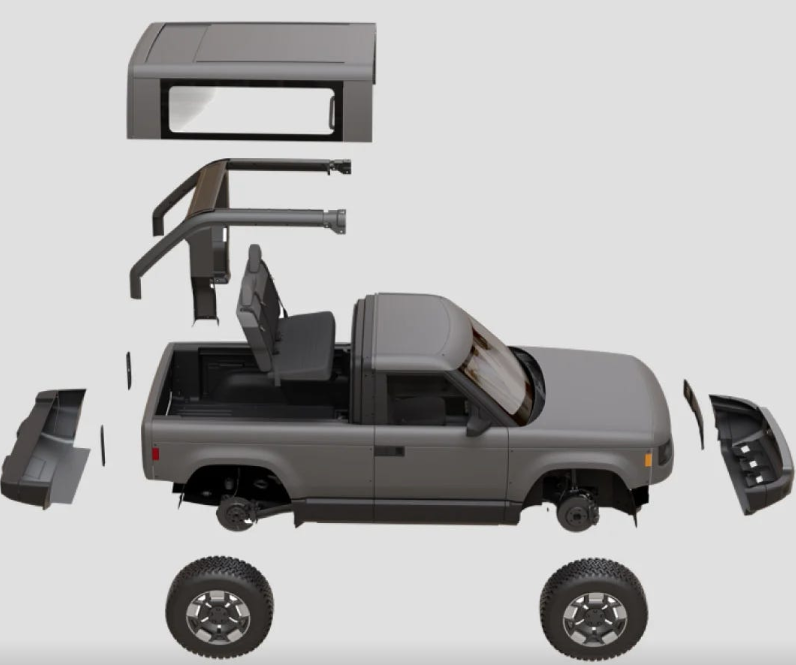
A new wave of investment is targeting artificial intelligence designed to understand and simulate the physical world, not just process text. According to an analysis in UpFront.eZine, several newcomers have collectively committed around $9 billion to develop AI systems aimed at engineering, manufacturing, and product design. The effort signals a shift from language-focused AI toward systems capable of reasoning about physics, geometry, and real-world behavior.
The centerpiece of this movement is a startup informally known as Project Prometheus, which reportedly secured about $6 billion in backing. The venture is associated with Amazon founder Jeff Bezos and focuses on building AI tools for the “physical economy,” including sectors such as aerospace, computing, and automotive manufacturing. Although the company has released little public information, hiring patterns suggest a strong emphasis on neural networks, autonomous intelligence, and industrial simulation.
The initiative reflects growing interest in what researchers call world-model AI. Unlike large language models trained primarily on text, these systems attempt to learn the structure of the physical world through data about objects, motion, and spatial environments. The approach already underpins technologies such as autonomous driving, where AI must interpret complex real-world conditions rather than merely generate language.
Industry activity around engineering software reinforces this trend. Nvidia, for example, invested about $2 billion in electronic design software leader Synopsys and is integrating technologies such as CUDA computing, agent-based AI workflows, and the Omniverse simulation platform into engineering tools. Analysts view the partnership as a signal that AI’s next frontier lies in simulation, digital twins, and advanced design environments.
The idea itself is not entirely new. Companies such as Hexagon have been developing reality-capture and simulation platforms for years to model roads and vehicles in advanced driver-assistance testing. Yet the scale of new funding suggests investors believe AI capable of modeling the real world could reshape CAD, manufacturing, and industrial engineering workflows.
If these efforts succeed, AI systems may move beyond answering questions to actively assisting engineers in designing and producing physical products.
