

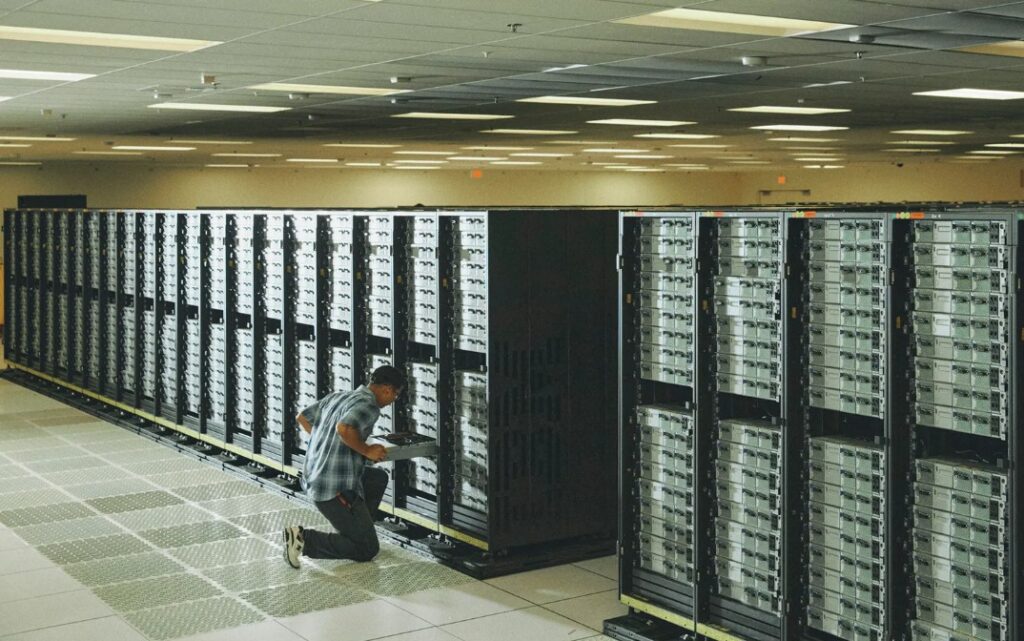
Sierra was a high-performance supercomputer at Lawrence Livermore National Laboratory built to run secure nuclear simulations for the U.S. government. Commissioned in 2018, it combined thousands of IBM Power9 central processors and Nvidia Volta graphics units to achieve roughly 94.6 petaflops at peak performance, making it one of the fastest machines on Earth during its prime. Over the next several years, Sierra helped model complex physical phenomena that support the National Nuclear Security Administration’s stockpile stewardship mission. It also earned a reputation among scientists who relied on its immense computational capacity, tells Wired.com.
By 2025, its relative rank had declined significantly, and its hardware and software environment were becoming obsolete. Components such as the original CPUs, GPUs, and operating system were no longer supported or easily replaced, and failure rates began climbing as the machine aged. Leaders at the lab decided that Sierra’s useful life had ended and that it was time to transition fully to its successor, El Capitan, an exascale system capable of nearly 1.8 exaflops, roughly 19 times Sierra’s peak.
The decommissioning process was methodical. Staff shut down the system in stages, drained its vast cooling infrastructure, and dismantled racks of compute nodes. Due to the classified nature of many workloads, data storage devices were destroyed or thoroughly neutralized to prevent any possibility of information leakage. Most hardware was shredded for recycling or repurposed, with sensitive components such as flash memory pulverized.
Sierra’s retirement highlights the lifecycle of cutting-edge scientific infrastructure; even machines that are still functioning can become too costly to maintain, or too slow relative to new platforms, to justify continued operation. It also reflects broader tensions in supercomputing: rising energy demands, supply challenges for aging parts, and the relentless push toward greater performance that leaves predecessors behind.
