

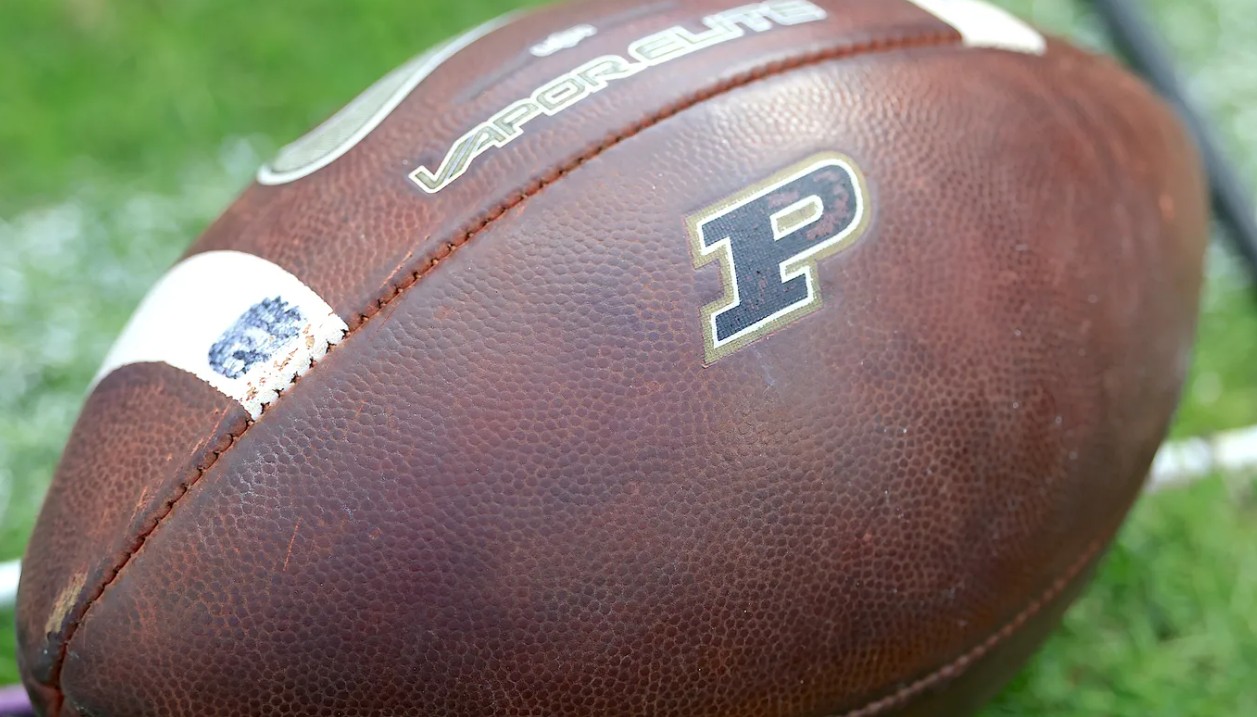
A well-thrown football spiral is an example of aerodynamics and rotational mechanics working together. Design News explores the physics with John Eric Goff, a Purdue University professor of sports engineering, who explains why a football’s distinctive shape and spin allow it to travel efficiently and predictably through the air.
Unlike spherical balls used in basketball, baseball, or soccer, a football has an elongated shape known mathematically as a prolate ellipsoid. Its aerodynamic behavior therefore changes dramatically with orientation. During a tight spiral, the ball presents a relatively small frontal area to the airflow, reducing drag. A tumbling or wobbling football exposes a larger and constantly changing area, increasing drag and making its trajectory less predictable.
Spin provides the stability needed to maintain the favorable orientation. Goff notes that a professional quarterback can impart roughly 600 rpm, or about 10 revolutions per second. This rotation creates gyroscopic stability. As gravity bends the ball’s trajectory downward, aerodynamic forces produce torque that causes gyroscopic motion, allowing the football’s nose to progressively follow its flight path rather than remain pointed in its original direction.
The football’s textured surface also contributes to its performance. Laces, seams, and small surface bumps help players grip the ball and generate spin, but they also influence airflow. Similar to stitches on a baseball or dimples on a golf ball, surface roughness can reduce aerodynamic drag compared with a completely smooth surface.
The same principles explain differences between passing and kicking. Quarterbacks seek stable spirals, while kickoffs and field goals typically rotate end over end, continuously changing the area exposed to airflow. Punters can use spiral kicks to improve stability and reduce drag, potentially increasing hang time. The article shows that successful football flight depends not simply on throwing harder, but on carefully controlling shape, orientation, spin, and airflow.
