

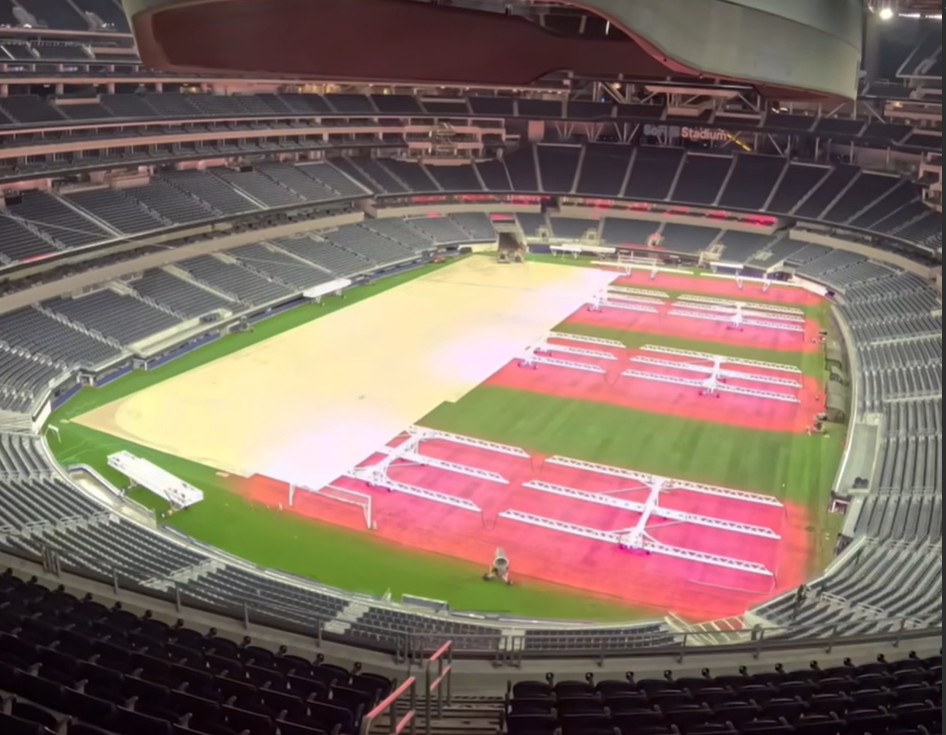
While fans focus on goals, tactics, and star players during the 2026 FIFA World Cup, an extensive scientific and engineering effort is taking place beneath every match. FIFA requires all World Cup games to be played on natural grass, with consistent ball behavior, traction, and playing feel across all venues. Achieving that standard is especially challenging for a tournament spanning 16 stadiums across the United States, Canada, and Mexico, including domed venues and stadiums normally equipped with artificial turf, tells The New York Times (full article available to subscribers).
Leading the effort is FIFA Senior Pitch Management Manager Alan Ferguson, supported by turfgrass experts John Sorochan of the University of Tennessee and John Rogers of Michigan State University. Since 2018, the team has studied various grass species and combinations to determine which would provide the most consistent playing surface. Different grasses possess unique characteristics. Kentucky bluegrass thrives in cooler climates, Bermuda grass performs best in warmer regions, and ryegrass establishes quickly but is more vulnerable to wear.
To evaluate performance, researchers developed a specialized testing device called the fLEX. Equipped with a 3D-printed soccer cleat, the machine replicates the movements and forces generated by a professional player, measuring energy absorption and return from the turf. Additional testing examined ball roll, rebound, and surface interaction under a wide range of environmental conditions. These studies led FIFA to select Bermuda grass for warmer outdoor venues and a custom blend of 84% Kentucky bluegrass and 16% ryegrass for domed and northern stadiums.
The project also introduced innovative turf production techniques. Most stadiums will receive sod grown using a “sod on plastic” method that preserves root structures during transport. Once installed, synthetic fibers are stitched into the turf to improve stability and durability.
Maintaining these living surfaces requires extensive support systems, including sand-based root zones, drainage infrastructure, LED grow lights, and industrial ventilation. Throughout the tournament, FIFA will continuously monitor traction, moisture levels, and field hardness to ensure every match is played on a surface that meets the organization’s demanding standards.
The result is a blend of biology, materials science, agriculture, and engineering designed to make the world’s largest soccer tournament feel uniform, regardless of where the game is played.
