

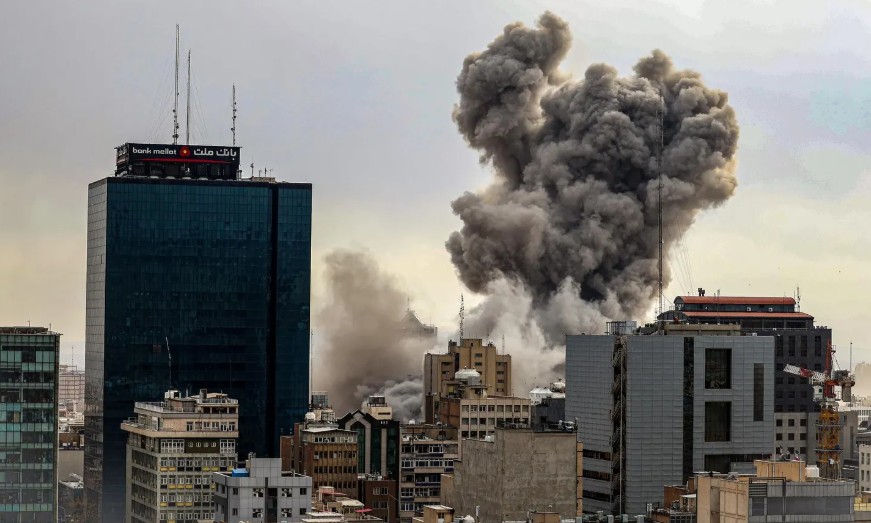
Modern warfare is often examined through its military and political consequences, yet its environmental effects can be equally profound and long lasting. In an analysis focused on Iran, environmental journalist Sanam Mahoozi highlights the overlooked aftermath of bombing campaigns: the massive clouds of toxic dust and debris released into the atmosphere. These particles can linger long after explosions end, creating a persistent environmental hazard that spreads far beyond the original impact sites, tells Mahoozi in this Forbes article.
Bombings pulverize buildings, infrastructure, soil, and industrial materials into microscopic fragments. The resulting dust clouds may contain concrete particles, heavy metals, chemical residues, and other toxic compounds. In regions such as Iran and the Middle East, where natural dust storms already occur frequently, these materials can easily mix with existing airborne dust. Once airborne, the contaminated particles can travel hundreds or even thousands of kilometers, exposing populations far from the battlefield.
The environmental consequences extend beyond immediate air pollution. Toxic dust eventually settles on farmland, rivers, and urban surfaces, potentially contaminating soil and water supplies. Over time, these pollutants can accumulate in ecosystems and enter food chains. Scientists warn that such contamination may contribute to long-term public-health risks, including respiratory illnesses and exposure to hazardous chemicals.
The article also notes that warfare increasingly targets infrastructure such as refineries, industrial sites, and energy facilities. When these installations are damaged, they release additional pollutants into the environment. Burning fuel depots, chemical storage sites, and industrial facilities can inject soot, hydrocarbons, and other hazardous compounds into the air, intensifying the environmental footprint of conflict.
Despite these risks, the environmental dimension of warfare often receives less attention than its immediate humanitarian impact. Mahoozi argues that the toxic afterlife of bombing should be considered a critical component of modern conflict, particularly in regions already vulnerable to climate stress and air-quality problems.
Understanding these hidden effects is essential for both environmental protection and post-war recovery. The dust and pollutants created by bombing may persist for years, shaping public health, ecosystems, and landscapes long after the fighting ends.
