

A gap exists between what robotics education teaches and what it takes to build machines that function reliably in the real world. The article from Hardware FYI explores this divide, arguing that a robotics PhD often emphasizes theory, algorithms, and controlled experimentation, while overlooking the operational complexity required to ship physical systems at scale.
At the core of this disconnect is the transition from lab success to deployment. In research settings, problems are well-defined, environments are controlled, and success metrics are clear. In contrast, real-world robotics involves unpredictable conditions, supply constraints, and human factors that introduce friction at every stage. The result is a “deployment gap” where technically sound systems struggle outside the lab.
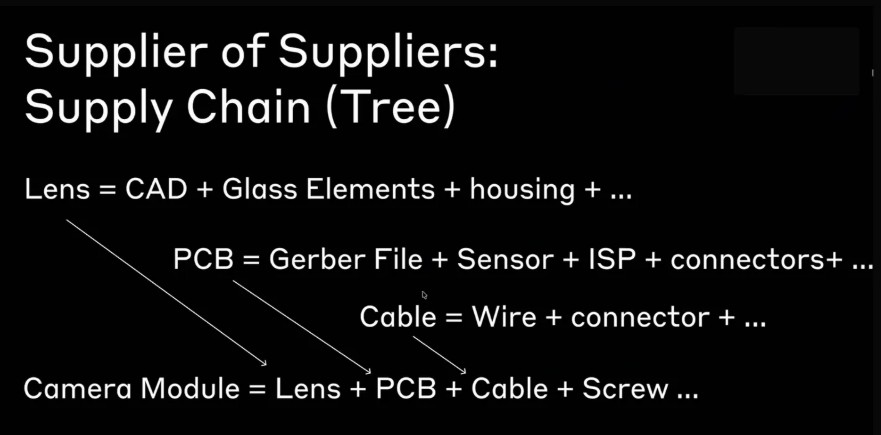
One of the most overlooked areas is supply chain thinking. Engineers are typically trained to consider components at a single level, focusing on what parts are needed to assemble a system. In practice, supply chains operate as deep dependency trees. Each component depends on multiple upstream suppliers, extending all the way back to raw materials. This complexity becomes critical when scaling production or adapting designs, as disruptions at any level can ripple across the system.
The article also reframes data collection as an operational challenge rather than a purely technical one. Gathering high-quality training data for robotics systems, especially those relying on human demonstrations, depends heavily on coordination, consistency, and process design. Without clear structures for contributors, even large datasets can become unreliable or unevenly distributed.
Ultimately, the article argues that robotics is not just an engineering discipline but a systems problem that spans logistics, manufacturing, and human workflows. Success requires understanding how hardware, software, and operations interact under real constraints.
For engineers moving from academia to industry, the takeaway is direct: mastering algorithms is only part of the job. The ability to navigate supply chains, manage data pipelines, and design for scale is what turns a working prototype into a viable product.
