

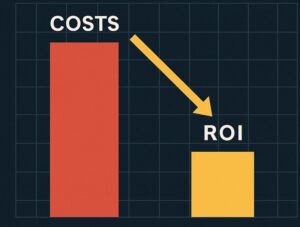
According to Schnitger Corporation, a recent MIT report underscores a stark reality: despite $30–40 billion in enterprise GenAI investment, 95% of organizations report zero return on investment (ROI). Only a tiny 5% see meaningful financial gains from integrated AI pilots, while most projects yield no measurable profit and loss impact.
Smaller companies—particularly mid-market firms—outpaced large enterprises in scaling AI from pilot to deployment. These agile players moved in as little as 90 days, while enterprises often took nine months or more. Meanwhile, although tools such as ChatGPT and Copilot are widely adopted—80% have piloted them and nearly 40% deployed—they mostly improve individual productivity, not bottom-line performance.
A critical insight: enterprise-grade AI systems often stumble early, with 60% evaluated, only 20% reaching the pilot phase, and a mere 5% hitting production. The report cites brittle workflows, lack of contextual learning, and misalignment with daily operations as key blockers. Moreover, AI’s impact on labor remains limited—just 2.7% of “labor value” may be replaced soon, largely via outsourcing cost reduction rather than internal restructuring.
On the cost side, expectations around LLM pricing have shifted dramatically. While older models such as GPT-3.5 became cheaper, adoption didn’t scale accordingly. Users now prefer the latest LLMs, which, though similarly priced per token, demand much more computation—transforming tasks from generating 1,000 tokens to 100,000, inflating costs from cents to several dollars per user task.
An example illustrates this starkly: someone using 10 billion tokens in a month—say, for automated software coding—could incur costs of $600,000 at current token rates. That’s a “sticker shock” scenario many organizations aren’t ready for.
