

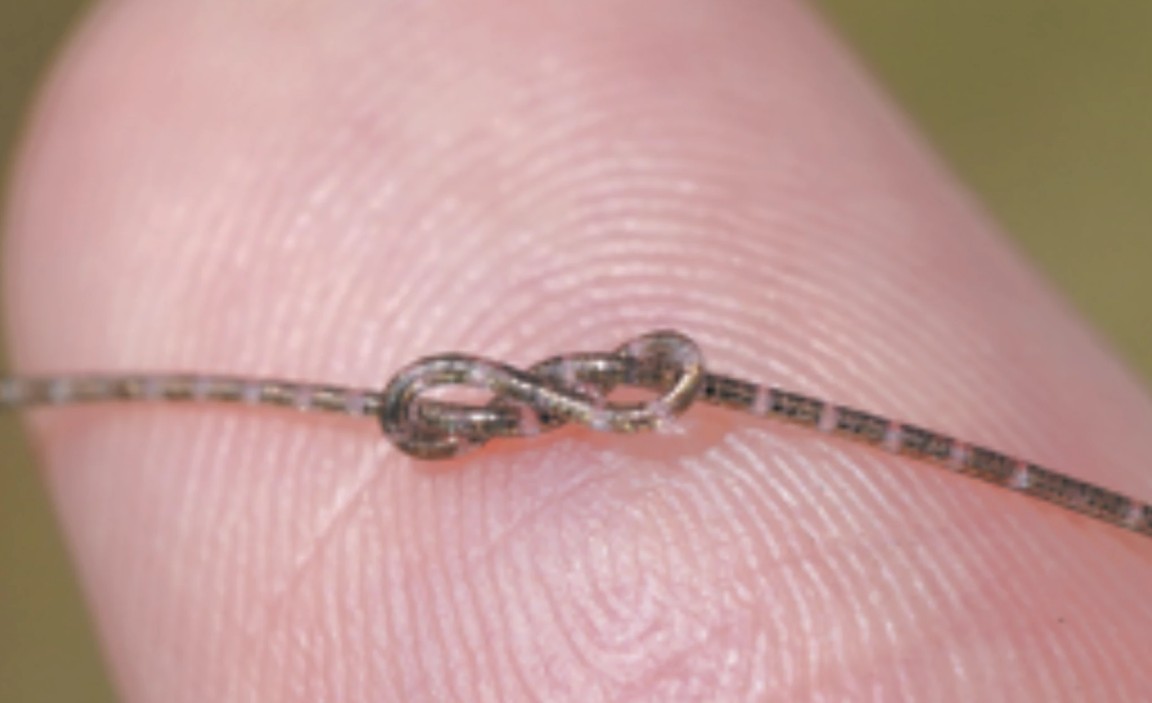
Researchers at Fudan University in Shanghai have built a functioning integrated circuit inside a flexible fiber thinner than a human hair, a breakthrough that blurs the line between electronics and textiles, tells this article from New Atlas. This “fiber chip” embeds transistors, resistors, capacitors, and diodes within a polymer thread, creating a complete computing system along its length. In just 1 millimeter of fiber, the team packed around 10,000 transistors—the density of processing power found in simple medical devices—by spiraling circuitry into stacked layers inside the strand rather than plastering components on a flat surface.
Stretch the fiber to meters, and it could house millions of transistors, potentially rivaling the performance of desktop computers. Importantly, the design retains flexibility and elasticity, allowing these fiber chips to bend, twist, and even withstand wear. Early tests demonstrated impressive durability: strands endured thousands of bend cycles and could survive everyday stresses such as abrasion and washing without losing function.
This architecture opens doors to applications in wearable technology, smart clothing, medical devices, and human-machine interfaces. Woven into fabric, fiber chips could collect and process data from the wearer, monitor vital signs, or interact with software in real time. In medical contexts, compliant fibers might integrate with biological tissue for neural monitoring or therapeutic functions without the rigidity of conventional electronics.
Unlike conventional silicon chips, which are rigid and planar, fiber chips are soft and stretchable, making them suitable for integration into everyday materials. The team reports that its fabrication methods align with existing semiconductor manufacturing tools, which could ease scaling production. Research published in the journal Nature outlines this decade-long effort and its implications for fabrics that process signals as efficiently as traditional devices—and for technologies ranging from advanced brain–computer interfaces to tactile feedback systems.
