

Space is getting crowded. Low Earth orbit (LEO) has become full of defunct satellites, fragments, and debris. Collisions among this junk risk triggering a runaway cascade known as Kessler Syndrome, where more debris leads to more collisions, ultimately making certain orbits unusable.
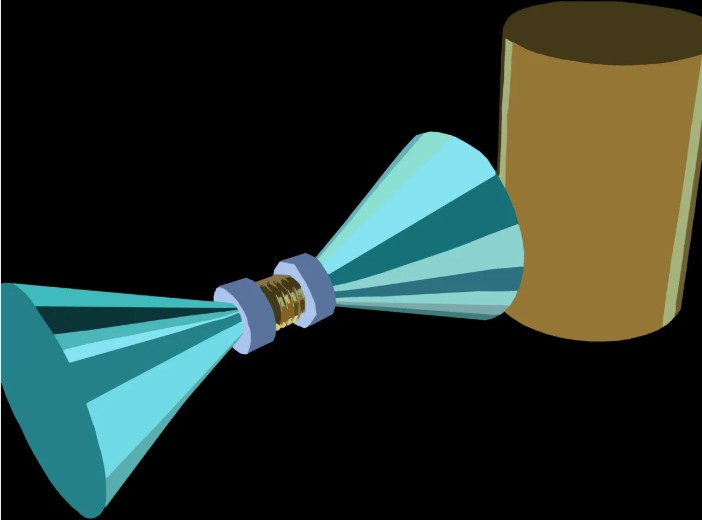
To avoid that scenario, Kazunori Takahashi’s team at Tohoku University has proposed a new kind of plasma thruster inspired by fusion reactor technologies, tells IEEE Spectrum. The idea: use a dual-plasma-beam system to slow down orbital debris without physical contact. One plasma beam is aimed at the debris, decelerating it; the other beam fires in the opposite direction to balance forces and keep the thruster station-keeping. That keeps net thrust zero, so the thruster doesn’t drift off.
An earlier design had a weak thruster force, insufficient to meaningfully deorbit larger debris. The new system improves on that by adding a “cusp-type” magnetic field (used in fusion labs to control plasma) instead of a simpler straight-field configuration. In experiments in vacuum conditions, this change increased the effective deceleration. At the same power, the thruster produced about 17.1 millinewtons of force; when pushed to 5 kW, that rose to about 25 millinewtons. Those levels are getting closer to what’s needed to deorbit a 1-ton object in ~100 days.
There remain hurdles. The tests were done at a very close distance (about 30 cm) from the debris target in vacuum chambers, not at the meters or tens of meters that would be realistic in orbit. Also, using two opposing beams means consuming more propellant/fuel, which may limit how long and how far the system can operate.
This bi-directional plasma thruster offers a promising non-contact method to reduce space debris, slowing down large objects so they reenter, burn up, or fall out of orbit. It’s not yet ready for deployment in space, but the improvements make it a serious contender in the battle against Kessler Syndrome.
