

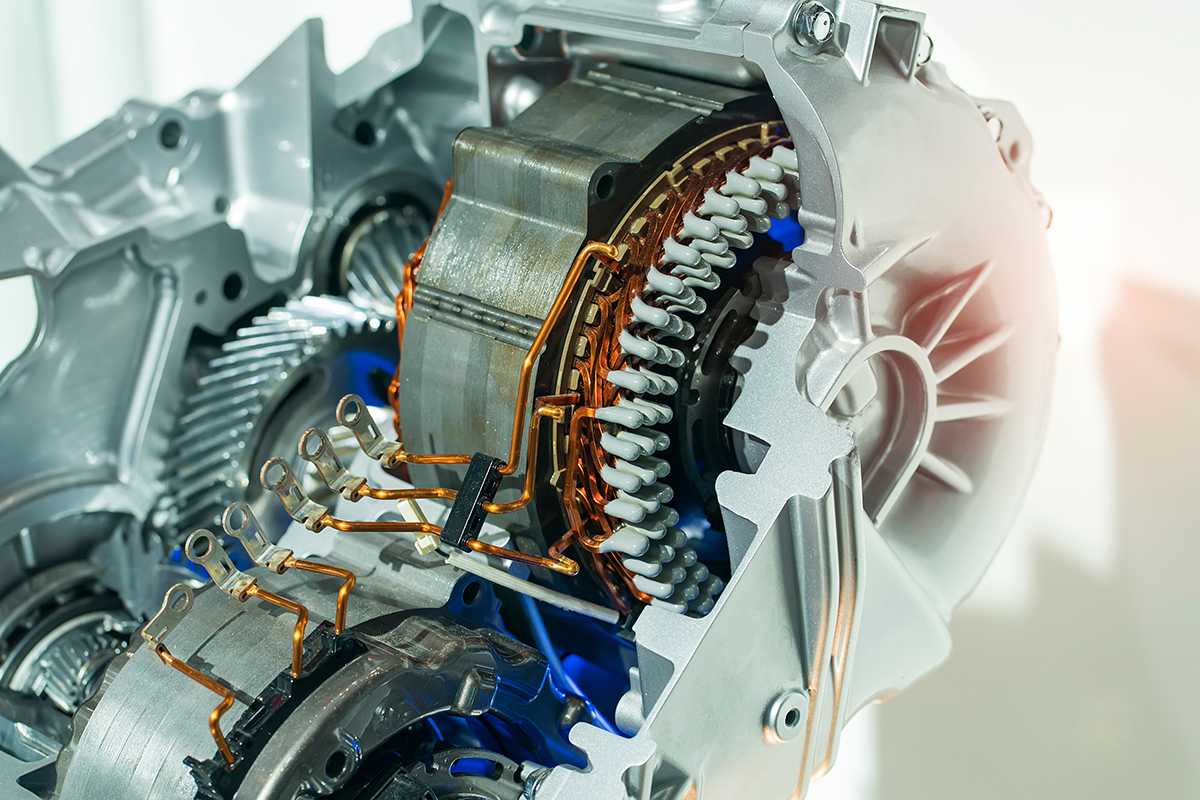
There is a great deal of discussion today about electric vehicles and the engineering challenges they create. In tribology, however, the fundamentals have not changed. What has changed is the application.
Tribology is the science of moving contact. Any time two surfaces move against one another, tribology is involved. That is true in engines, bearings, gears, seals, and countless other mechanical systems. In that sense, tribology is everywhere. As vehicles and other mechanical systems become faster, more complex, and more demanding, tribology is becoming more important.
The Science Is the Same. The Demands Are Different.
Electric vehicles are a good example. They do not require a completely new set of tribology fundamentals. But they do create a different operating environment. You no longer have the traditional combustion engine, but you do have different components and different demands on materials and lubricants. In some cases, you also have electrical effects within bearings and motors that require special attention. The science is not new. The challenge is applying it correctly under new conditions.
In some EV motors, electrical current can pass through the bearings and damage the lubricated contact surfaces. That can lead to pitting, fluting, vibration, noise, lubricant degradation, and premature failure. It may sound like an electrical issue, but it is also a tribology issue because it involves surface interaction, lubrication, materials, and wear under changing operating conditions.
That is why I see electric vehicles not as a break from tribology, but as a reminder of why the field matters. As systems become more advanced, the margin for error becomes smaller. A solution that works under one set of conditions may fail when speed increases, load changes, temperature rises, or the operating environment shifts.
Temporary Fixes Are Not the Same as Understanding
Too often, companies still solve these problems by trial and error. They have a wear problem, a bearing problem, or a lubrication problem, and they keep working until they find something that appears to solve it. Sometimes it does solve the immediate issue. But if they do not fully understand why it worked, that solution may not hold up for long. When the system changes, the demands increase, and they are forced to go back to the drawing board because the underlying issue was never really addressed. That is one of the central problems in tribology today.
For me, that is the larger lesson. The real issue is not simply that electric vehicles are new. The real issue is that tribology problems are often recognized too late, and they are still too often treated as troubleshooting issues rather than engineering fundamentals.
Getting Back to the Fundamentals
If we want to understand these systems better, we have to begin where tribology begins: with the surface. Two surfaces are in contact. Each surface has roughness, structure, mechanical properties, and chemical properties. Then we must consider the environment and the lubricant. The lubricant is not just a fluid with a generic purpose. It contains many chemistries, and those chemistries interact with the surfaces differently depending on load, speed, temperature, and material. Those interactions affect the behavior of the contact, and the behavior of the contact affects the performance of the entire system.
This is why the fundamentals matter so much. When engineers understand what is happening at the surface and interface level, they are in a much better position to solve the real problem rather than apply a temporary fix. That matters even more now because today’s systems are being asked to do more.
Electric vehicles are only one example. More broadly, engineering systems today are expected to run faster, carry higher loads, operate under more complex conditions, and deliver greater efficiency and reliability. Those demands place greater pressure on bearings, gears, surfaces, lubricants, and materials. In other words, they place greater pressure on tribology.
Yet at the same time, tribology has lost visibility in engineering education. Years ago, many major universities taught tribology or closely related subjects more directly. Today, that is far less common, even though the systems themselves have not gone away. Companies still make vehicles. They still make bearings, gears, and every kind of moving mechanical system. The need is still there. In many ways, it is growing. But fewer engineers come into industry with a strong grounding in the fundamentals.
Closing the Educational Gap
When companies do not have people who understand tribology well, they may not even recognize that they are dealing with a tribology problem until late in the process. And if they cannot define the problem clearly, it becomes much harder to work with bearing suppliers, lubricant companies, or materials experts to solve it in a lasting way. As I often say, the last thing many companies think is that they have a tribology problem. Only after other approaches fail do they ask for a better bearing or a better oil. By then, they may still not fully understand what the real issue is.
Electric vehicles have made this gap easier to see, but they did not create it. They simply make the consequences harder to ignore. When systems become more demanding, the cost of incomplete understanding goes up. A solution based on trial and error may work for a time, but as load, speed, temperature, and operating conditions change, that solution may no longer hold up. That is why tribology matters more today, not less. The applications are changing. The demands are rising. And that is exactly why the fundamentals have never been more valuable.
About Said Jahanmir
 Said Jahanmir, Ph.D., is Assistant Director for Federal Partnerships at the National Institute of Standards and Technology’s (NIST) Office of Advanced Manufacturing (OAM) and an instructor for the MIT Professional Education course Tribology: Friction, Wear, Lubrication, and Design. He holds B.S., M.S., and Ph.D. degrees in Mechanical Engineering from the University of Washington and MIT, respectively, and has held leadership roles in academia, industry, and government, including at UC Berkeley, Cornell, Exxon Research and Engineering, the National Science Foundation, and NIST. A recognized leader in tribology and manufacturing, he served as the 137th President of ASME and has received honorary membership in both ASME and STLE.
