

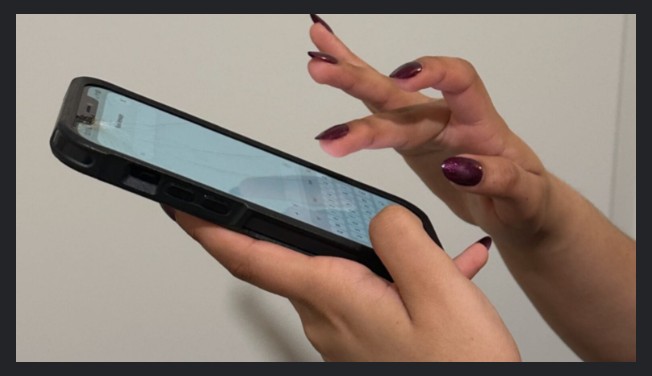
Touchscreens are designed to respond to the electrical conductivity of human skin, which makes them unreliable for users with long fingernails. Because nails are nonconductive, taps often fail to register, forcing users to adapt awkward techniques or rely on styluses. A recent research effort highlighted in Ars Technica explores a novel workaround: a transparent, conductive nail polish that allows fingernails to function like fingertips.
The innovation originates from a student-led chemistry project aimed at solving a practical, everyday frustration. Rather than embedding metallic particles or carbon nanotubes, which can raise safety concerns and affect appearance, the researchers pursued a different route. Their formulation uses a combination of taurine and ethanolamine, enabling proton exchange at the surface of the nail. This mimics the electrical behavior of skin, allowing capacitive touchscreens to detect contact.
This chemistry-driven approach offers both functional and aesthetic advantages. The polish remains clear and can be applied over any manicure, preserving cosmetic flexibility while introducing conductivity. It also avoids the darker or textured finishes associated with earlier conductive coatings, making it more appealing for everyday use.
Early testing demonstrates that the concept works, effectively turning fingernails into stylus-like tools. The potential applications extend beyond convenience for people with long nails. Individuals with calloused or very dry skin, who may also struggle with touchscreen responsiveness, could benefit from the same solution.
However, the technology remains in a prototype stage. Current formulations lose effectiveness after hours or days, limiting their practicality. Researchers are working to improve durability, consistency, and finish quality before any commercial release.
The broader implication is clear: as human-device interaction evolves, even small usability gaps can inspire material-level innovation. This conductive polish illustrates how chemistry can bridge the mismatch between rigid hardware assumptions and real-world user behavior, offering a simple yet inventive fix to a surprisingly persistent problem.
