

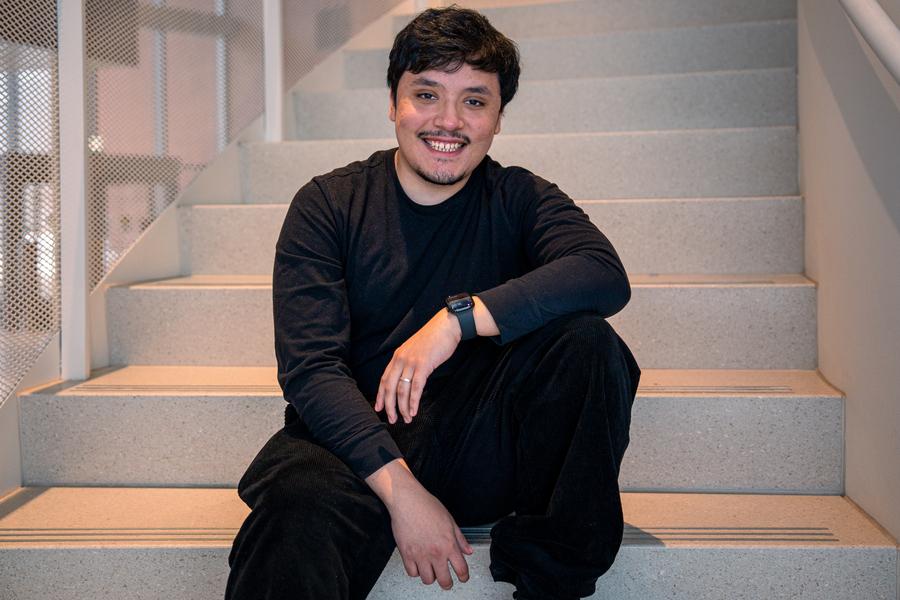
Creative expression at the intersection of science and art is driving new approaches to understanding sound. The MIT News article profiles Mariano Salcedo, a graduate student developing artificial intelligence systems that translate music into dynamic visual forms, pushing beyond traditional audio visualization.
At the center of Salcedo’s work is a technique called neural cellular automata, which combines classical rule-based systems with machine learning. These systems generate images that evolve over time and can regenerate patterns based on input. When paired with music, they respond to rhythm, intensity, and structure, effectively allowing sound to be “seen” as it unfolds.
Unlike conventional visualization tools that map sound to predefined graphics, this approach produces emergent, self-organizing visuals. Users can interact with the system through a web interface, adjusting how musical energy influences the evolving imagery. The result is a performance environment where visuals are not scripted but grow organically alongside the audio.
Salcedo’s work reflects a broader ambition: to deepen the relationship between human perception and computational systems. By designing visuals that enhance rather than simply accompany music, he aims to create immersive experiences that expand how audiences interpret sound.
The research also carries implications beyond artistic applications. Neural cellular automata model self-organizing behavior, a property found in systems ranging from biological organisms to social dynamics. Exploring these patterns through sound-driven visualization could offer insights into complex systems where local interactions produce global behavior.
Salcedo’s path underscores the interdisciplinary nature of this work. Originally trained in mechanical engineering, he shifted to artificial intelligence after encountering its creative potential, eventually combining signal processing, music theory, and machine learning.
The project highlights a growing trend in research: using AI not only for analysis or automation but as a tool for creative exploration. By bridging computation and art, this work suggests new ways to experience music while advancing understanding of dynamic, self-organizing systems.
