

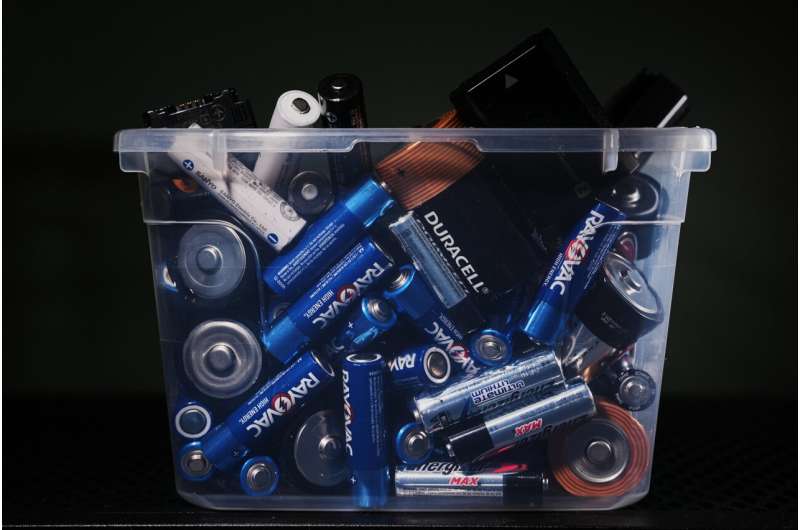
Household batteries are everywhere—in remote controls, flashlights, toys, and tools—but many people simply toss them in the trash when they run down. That casual disposal has consequences: old batteries can leak heavy metals such as cadmium and nickel into soil and water at landfills, and lithium-ion cells pose fire risks in trash trucks and recycling facilities if they short or overheat.
Battery recycling provides a way to reduce those hazards and keep valuable materials in circulation, tells Tech Xplore. Facilities that accept old batteries break them down into constituent components, such as metals and plastics, which can then be used to make new products and even new batteries. Recycling small batteries also reduces the need to mine raw materials, a process that contributes to greenhouse gas emissions and environmental disruption.
To recycle safely, start by sorting batteries by type. Alkaline and zinc-carbon batteries typically end up in regular trash in many places, but recycling them is still better for capturing metals and keeping harmful substances out of landfills. Lithium-ion batteries, found in rechargeable tools, vacuums, and increasingly single-use devices, require special care because of their fire risk. Before transporting them, taping terminals or placing them in plastic bags helps prevent accidental shorts and sparks. Then identify registered drop-off sites; many hardware and office-supply stores accept old batteries, and nonprofit resources such as The Battery Network help locate local recycling options by ZIP code.
National and local rules vary, so it’s worth checking disposal regulations where you live. Some U.S. states have specific recycling requirements for household and rechargeable batteries, while others leave fewer options in place.
While recycling doesn’t erase all environmental costs associated with battery production, it reduces the burden by keeping toxic materials out of waste streams, lowering pressure on virgin mineral supply, and increasing the circular use of metals such as cobalt and nickel. By adopting safe disposal habits, consumers can protect their homes and communities while contributing to broader sustainability goals.
