


RIVERSIDE, CA, Aug 5, 2025 – UC Riverside physicist Peng Wei has filed a U.S. patent for a new process that could help solve one of quantum computing’s persistent challenges: instability caused by microscopic flaws in superconducting materials.
Quantum computers provide new methods for solving problems in drug discovery, machine learning, genetic research, and climate modeling. But their progress has been slowed by surface defects in superconductors, which trigger interference and errors in quantum calculations.
Wei’s team has developed a solution by coating niobium – a metal superconductor for quantum circuits – with a thin layer of gold. This gold shield smooths out imperfections without disrupting the superconducting state that is central to the function of quantum computers.
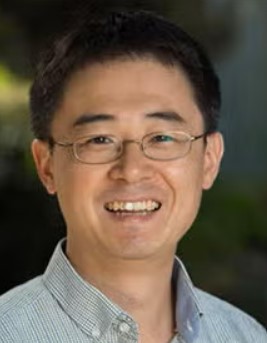
“By using gold in these key interfaces, we’re able to maintain a cleaner signal path and reduce loss in the superconducting circuit,” Wei said, an associate professor of physics at UC Riverside. While traditional semiconductor research focuses on a material’s internal properties, Wei and his team studied the outermost atomic layers, where small inconsistencies can affect quantum systems.
Unlike computers which use binary bits, quantum computers use qubits – quantum bits that can exist in multiple states at once. In niobium superconductors, qubits depend on pairs of electrons called Cooper pairs. But even the smallest surface defects can break these pairs and destroy the quantum state, a problem known as ‘decoherence’.
“The problem with superconducting surfaces is that they’re never perfect,” Wei explained. “These defects become little traps to break Cooper pairs, which can compromise the qubit performance.”
Wei’s gold layer acts as a protective shield. It’s thin enough to leave superconducting properties unchanged but thick enough to prevent surface defects from disrupting the system. The gold layer is applied through an “epitaxial” process, growing a crystalline film on the niobium – a process that fits into standard fabrication methods.
“That balance was critical,” Wei said. “Too thick, and we kill the superconductivity. Too thin, and the defects still dominate. We found a sweet spot.”
Wei emphasized that the gold-layer process aligns with existing semiconductor fabrication, allowing for easier integration into commercial quantum processor production. By using an epitaxial method to grow a crystalline gold layer on niobium, the team ensures atomic-level precision – a critical factor for improving quantum device performance and scalability.
“Quantum processors need better superconductor materials and consistency,” Wei said. “This technique offers a path to make them more stable, more repeatable, and ultimately, more scalable.”
Source: UC Riverside
About UC Riverside

The University of California, Riverside, (UCR) founded in 1954, is a public research university located in Riverside, CA. The campus offers 81 undergraduate majors, 48 master’s programs, and 42 doctoral degrees across three colleges, two professional schools, and two graduate schools. UCR reported a campus budget of about $1.3B in fiscal year 2023, with an endowment nearing $250M. It serves a diverse global community, with international students from over 65 countries. UCR employs approximately 3,576 faculty and staff across its campuses. UCR’s academic programs span engineering, science, humanities, business, public policy, and creative writing. UCR is engaged in research and industry partnerships in fields such as AI, robotics, environmental science, and public policy, supporting innovation and workforce development from its Riverside headquarters.
